



What's Happening?
A YouTube creator, Maxwell Peters, has successfully converted a 25-year-old Ford E350 box truck, originally suffering from rotten floors and a leaking roof, into a fully functional off-grid tiny home. This extensive project, which took approximately a year and a half,
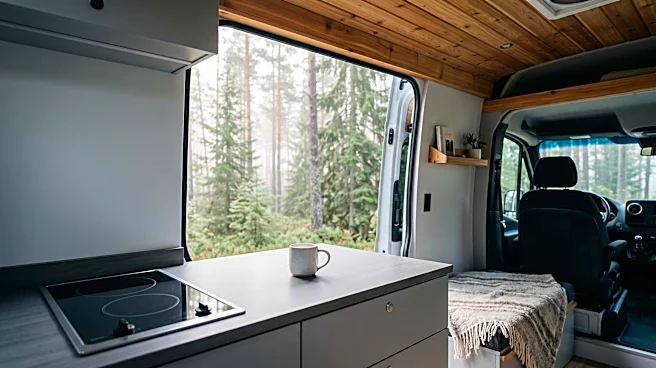
involved adding significant modifications such as solar power, a complete kitchen, and tool storage. Peters, who began with no prior experience in van conversions, plumbing, or electrical work, taught himself the necessary skills throughout the rebuild process. The transformation included installing RV windows, a custom entrance door, lightweight interior framing, insulation, and a cedar-plank ceiling. The finished setup features a floating bed with garage-style storage underneath for tools and a gasoline heater. The off-grid system is powered by 640 amp-hours of batteries, a 3,000-watt inverter, and four 200-watt solar panels on a custom roof rack, providing enough energy for a fridge, microwave, and a two-burner induction cooktop. Despite facing challenges, including a blown head gasket that required him to replace the engine himself, Peters completed the project, demonstrating that extensive DIY skills can lead to a self-sufficient living solution.
Why It's Important?
This DIY conversion highlights a growing trend in the U.S. towards alternative living solutions and self-sufficiency, particularly within the 'van life' movement. It demonstrates that entry into this lifestyle doesn't necessarily require expensive, high-end vehicles, making it more accessible to a broader demographic. The project showcases the potential for repurposing older vehicles, contributing to sustainability by extending their lifespan and reducing waste. Furthermore, Peters' journey underscores the value of acquiring practical skills in areas like electrical work, plumbing, and construction, which can empower individuals to create personalized and cost-effective living spaces. The ability to build an off-grid system also points to a desire for energy independence and reduced reliance on traditional infrastructure, a significant consideration for many Americans concerned about utility costs and environmental impact. This initiative could inspire others to undertake similar projects, fostering a community of DIY enthusiasts and promoting innovative approaches to housing and travel.
What's Next?
The success of Peters' project is likely to further popularize the concept of DIY van conversions, potentially leading to an increase in online tutorials, workshops, and communities dedicated to teaching these skills. We may see a rise in demand for older, more affordable box trucks and vans as platforms for similar projects, impacting the used vehicle market. Manufacturers of off-grid components, such as solar panels, inverters, and specialized appliances, could experience increased sales as more individuals pursue these conversions. Additionally, the visibility of such projects on platforms like YouTube could influence mainstream perceptions of 'van life,' shifting it from a niche interest to a more widely accepted and aspirational lifestyle. This could also prompt discussions around zoning laws and regulations concerning mobile living and off-grid setups in various U.S. localities, as more people adopt these alternative housing solutions.
Beyond the Headlines
Beyond the immediate practicalities of vehicle conversion, this story touches on deeper societal shifts, including a re-evaluation of traditional homeownership and a growing emphasis on experiential living over material possessions. The 'van life' movement, exemplified by Peters' project, represents a pursuit of freedom, adventure, and a minimalist lifestyle that resonates with many Americans seeking to escape the pressures of conventional living. It also highlights the psychological benefits of self-reliance and problem-solving, as individuals like Peters gain confidence and new skills through challenging DIY endeavors. The project's off-grid capabilities reflect a broader cultural interest in sustainability and resilience, encouraging a closer connection to nature and a reduced environmental footprint. This trend could foster a stronger sense of community among like-minded individuals who share resources, knowledge, and travel experiences, creating a subculture that values independence, creativity, and adaptability in the face of modern challenges.