







What's Happening?
Russia doubled its diesel fuel exports in October, shipping 271,000 barrels per day compared to 135,000 barrels in September. This increase followed a deal between U.S. President Donald Trump and Russian President Vladimir Putin on October 9, aimed at
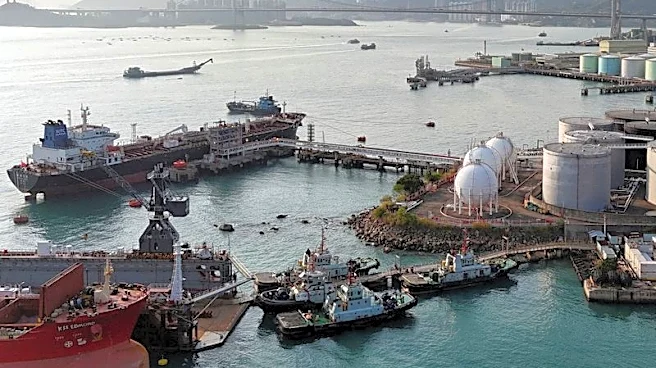
immediately supplying more fuel to global markets. The agreement also involved U.S. pressure on Ukraine to halt attacks on Russian oil refineries. Despite the surge in Russian exports, none of the diesel fuel has reached the U.S. market. Instead, shipments have increased to countries like Brazil and Turkey. One Maltese-flagged tanker, Agioi Fanendes, carrying nearly 300,000 barrels of Russian diesel, has been stranded off the U.S. East Coast, awaiting a buyer, with its Greek operator stating no instructions have been received regarding its destination. Two other tankers initially bound for the U.S. also changed course. The deal has drawn criticism from Democrats and some Republicans in Congress, with New Jersey Governor Mikie Sherrill warning port operators in her state to turn away any tankers carrying Russian diesel.
Why It's Important?
This development highlights the complex and often contradictory nature of international energy markets and geopolitical strategies. The U.S. administration's effort to lower domestic fuel prices through a deal with Russia has increased global supply, but the direct benefit to the U.S. market has not materialized due to various factors, including political opposition and logistical challenges. The situation underscores the difficulties in navigating sanctions and political pressures in the energy sector. While the White House maintains that increased global supply helps lower prices for Americans, the lack of direct imports into the U.S. could be seen as a failure to fully achieve the deal's stated objective. The controversy surrounding the agreement also reflects deep divisions within U.S. politics regarding engagement with Russia, particularly amidst ongoing international conflicts.
What's Next?
The immediate future for Russian diesel exports remains uncertain. Strikes on Russian refineries resumed on October 30, and Russia has extended its ban on diesel exports until the end of January, albeit with exemptions. Analysts anticipate Russian exports to be 'very lackluster' in the coming months, as the country prioritizes domestic fuel supplies due to shortages of gasoline. The stranded tanker off the U.S. coast will likely continue to be a point of contention, with ongoing negotiations between U.S. officials and the vessel's owner. The political backlash against the deal in the U.S. could also lead to further legislative or executive actions aimed at preventing Russian fuel imports, regardless of any agreements made. The broader impact on global fuel prices will depend on the interplay of Russian export policies, refinery output, and international demand.
Beyond the Headlines
The situation reveals the intricate web of economic and political leverage in global energy trade. The U.S. decision to pressure Ukraine to halt refinery attacks, in exchange for increased Russian fuel supply, raises ethical questions about prioritizing domestic economic concerns over the strategic interests of an ally in conflict. It also exposes the limitations of such deals when faced with strong domestic opposition and logistical hurdles. The inability of Russian diesel to reach U.S. shores, despite the agreement, highlights the power of political will and public sentiment in shaping market realities. This scenario could set a precedent for future international energy negotiations, demonstrating that even high-level agreements can be undermined by a complex interplay of sanctions, political pressure, and public opinion, ultimately affecting the efficacy of such diplomatic maneuvers.