







What's Happening?
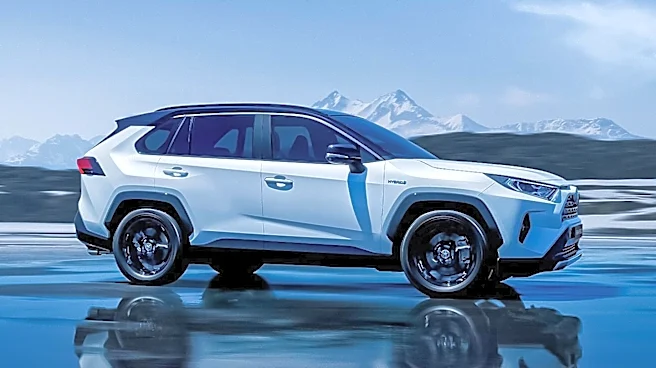
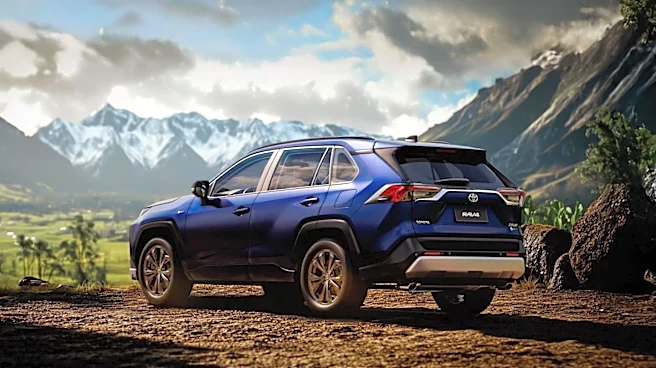
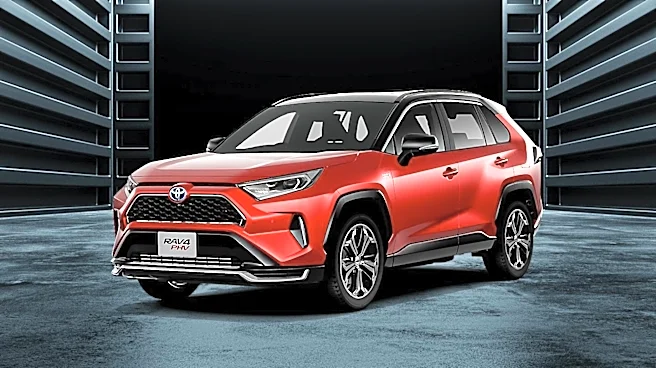
Toyota is experiencing difficulties with the rollout of its redesigned 2026 RAV4, which has transitioned to a hybrid-only lineup. Despite high demand, production has not kept pace, leading to significant customer waitlists. The RAV4, a bestselling SUV
in the U.S., saw a 40% decrease in sales through May compared to the previous year. Toyota's plants in Canada, Japan, and Kentucky are struggling to meet demand, even as the company stocked up on the outgoing model to ease the transition. The sales slump could result in a potential $1.8 billion loss for Toyota in 2026.
Why It's Important?
The production challenges faced by Toyota with the RAV4 could have significant financial implications, potentially impacting the company's market position in the U.S. SUV segment. The RAV4's status as a top-selling vehicle underscores the importance of a smooth transition to new models. The delay in meeting consumer demand may affect Toyota's overall sales performance and market share, especially as competitors continue to innovate and capture market interest. The situation highlights the complexities of transitioning to hybrid models and the need for efficient production strategies.
What's Next?
Toyota will need to address production bottlenecks to meet the high demand for the new RAV4. The company may need to explore additional manufacturing solutions or adjustments to its supply chain to accelerate production. The response from consumers and competitors will be crucial in determining the RAV4's future market performance. Toyota's ability to resolve these issues promptly will be key to regaining its position as the leading SUV in the U.S. market.