





What's Happening?
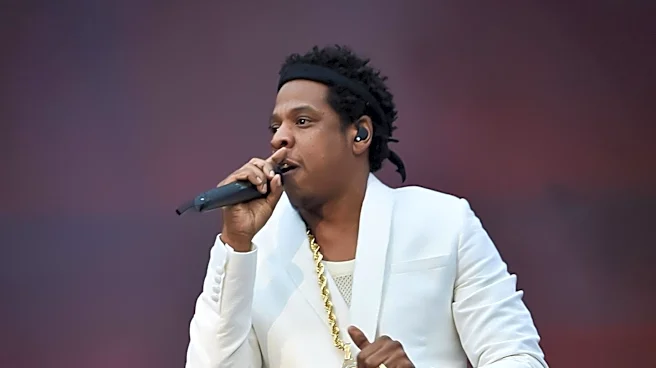
Sports commentator Jason Whitlock has openly criticized the NFL's decision to select hip-hop mogul Jay-Z as the headliner for the upcoming Super Bowl LXI halftime show. Whitlock voiced his strong disapproval on social media, questioning the NFL's choice
given Jay-Z's self-admitted past as a drug dealer and his use of profanity in his music. He also referenced Jay-Z's past association with Sean 'Diddy' Combs to further challenge his character. This announcement has generated mixed reactions, with hip-hop fans celebrating the milestone while conservative voices like Whitlock express concerns about the suitability of the performer for such a mainstream event. Jay-Z, who has been involved in selecting and producing Super Bowl musical performances since 2019 through Roc Nation, is now set to lead the show himself, coinciding with the 30th anniversary of his debut album.
Why It's Important?
This controversy highlights a recurring cultural debate surrounding the Super Bowl halftime show and the types of artists chosen for this globally televised event. The Super Bowl halftime show is one of the most-watched musical performances worldwide, making the selection of its headliner a significant decision with broad implications for brand image, audience reception, and cultural messaging. Whitlock's criticism reflects a segment of the audience that believes the NFL should prioritize performers with a 'cleaner' public image and lyrical history, particularly given the family-friendly nature often associated with major sporting events. Conversely, the NFL and its partners, like Apple, are embracing artists with significant cultural influence and a diverse appeal, aiming to attract a wider and younger demographic. The debate underscores the tension between traditional values and evolving cultural norms in mainstream entertainment.
What's Next?
Despite the online debate and criticism from figures like Jason Whitlock, Jay-Z is expected to proceed with his performance at Super Bowl LXI. NFL Commissioner Roger Goodell and Apple Vice President Oliver Schusser have both expressed excitement and support for Jay-Z's involvement, praising his impact on the halftime show and global music culture. The performance is anticipated to be a memorable and high-energy spectacle, broadcast live on ABC, ESPN, and Disney+. The event will likely continue to generate discussion regarding the intersection of sports, entertainment, and cultural values. The NFL's continued partnership with Roc Nation suggests a sustained direction towards featuring influential hip-hop and contemporary artists for future halftime shows, potentially leading to ongoing discussions and varied public reactions.
Beyond the Headlines
The ongoing discussion surrounding Jay-Z's Super Bowl halftime performance delves into deeper implications concerning artistic freedom, moral gatekeeping in entertainment, and the evolving definition of a 'mainstream' artist. Whitlock's comments touch upon the idea of redemption versus accountability, questioning whether an artist's past actions or lyrical content should disqualify them from major public platforms, regardless of their current success or influence. This also reflects a broader cultural shift where figures from diverse backgrounds, including those with controversial pasts, are increasingly gaining prominence in mainstream media. The NFL's decision to stand by Jay-Z, despite criticism, signals a strategic move to align with contemporary cultural trends and appeal to a diverse audience, potentially redefining what is considered acceptable or desirable for such high-profile events. This trend could influence future selections for major entertainment spectacles, pushing boundaries and challenging traditional perceptions of celebrity and public image.