






What's Happening?
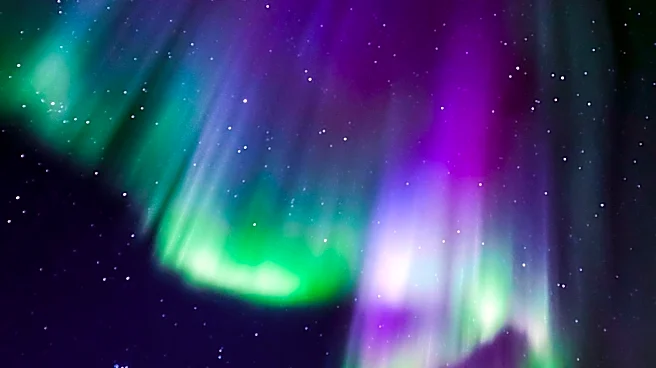
The Northern Lights, or aurora borealis, have been interpreted in various ways by different cultures throughout history. In the late 18th century, a blood-red aurora was seen as a bad omen preceding the French monarchy's overthrow. Similarly, some Inupiat
people of northern Alaska viewed the lights as evil, while the Meskwaki people of Wisconsin considered them the ghosts of enemies. Conversely, in coastal Sweden, the lights were seen as a good omen for fishermen, believed to be reflections of fish scales, indicating a bountiful harvest. These interpretations highlight the diverse cultural significance attributed to this natural phenomenon.
Why It's Important?
Understanding the cultural interpretations of the Northern Lights provides insight into how natural phenomena can influence societal beliefs and practices. These interpretations reflect the human tendency to ascribe meaning to unexplained events, which can shape cultural narratives and traditions. The varying views—from omens of doom to signs of prosperity—demonstrate the impact of environmental factors on cultural development. This knowledge can enhance appreciation for cultural diversity and the ways in which societies interact with their natural surroundings.