







What's Happening?
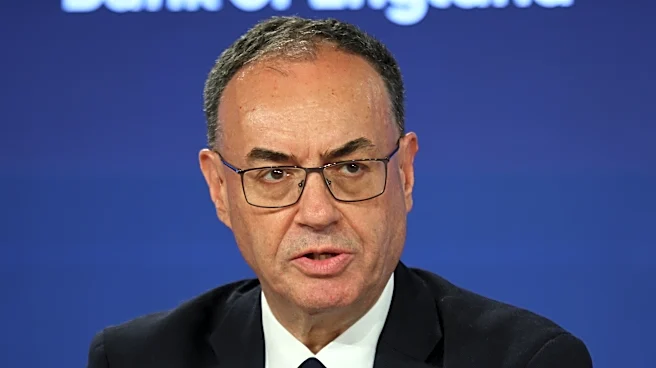
The British central bank has decided to maintain its interest rate at 3.75%, despite internal disagreements among committee members. Six out of nine members voted to keep the rate unchanged, while three advocated for an increase to 4%. This decision comes
amid rising energy prices, which have contributed to increased inflation. The central bank aims to stabilize price development, typically targeting around 2% inflation. The recent escalation in the conflict between the U.S. and Iran has further driven energy prices up, prompting discussions on potential rate hikes among central banks.
Why It's Important?
The decision to hold interest rates steady reflects the central bank's cautious approach to managing inflation and economic stability. Rising energy prices and inflation pose significant challenges for policymakers, impacting consumer purchasing power and economic growth. The central bank's actions can influence financial markets, borrowing costs, and investment decisions. Maintaining the current rate may provide short-term stability, but ongoing inflationary pressures could necessitate future adjustments, affecting businesses and consumers.
What's Next?
The central bank will likely continue to monitor inflation trends and economic indicators to determine future interest rate decisions. Policymakers may need to balance the need for economic growth with the risk of rising inflation. Stakeholders, including businesses and consumers, will be attentive to any changes in monetary policy that could impact financial conditions. The ongoing geopolitical tensions and their effect on energy prices will also be critical factors in shaping future central bank actions.