





What's Happening?
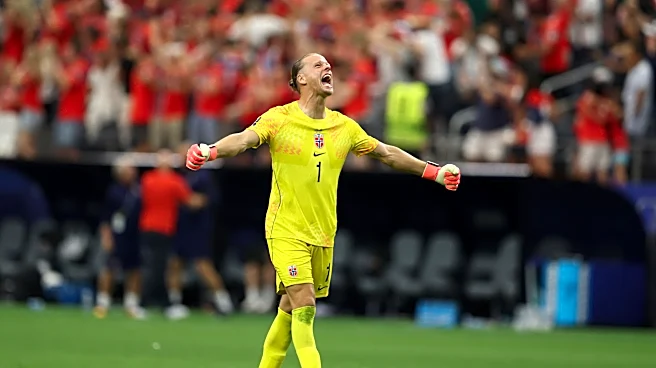
Norwegian football fans have introduced a unique synchronized rowing chant, known as the Viking row, at the 2026 World Cup. This chant, inspired by the rhythmic 'RO-SEN-BORG' chant of the Norwegian football club Rosenborg BK, involves fans sitting down
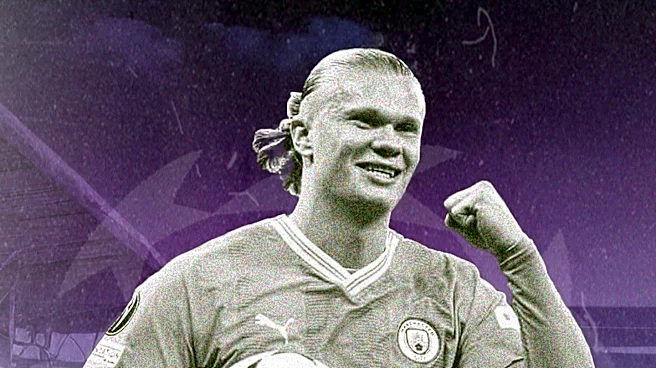
and mimicking rowing motions while chanting 'Ro,' the Norwegian word for 'row.' The phenomenon has gained significant attention, with fans, players, and even Norwegian MPs participating. The chant was devised by Ole Frøystad, a primary school teacher, and has been widely promoted online. Norway's team, led by star striker Erling Haaland and captain Martin Ødegaard, has embraced the chant, which has become a symbol of unity and support for the team.
Why It's Important?
The Viking row has transcended its role as a mere football chant, becoming a cultural phenomenon that unites fans and players alike. It has enhanced the stadium atmosphere and provided a sense of community among supporters. The chant's popularity highlights the power of sports to bring people together and create shared experiences. Additionally, it has drawn international attention to Norway's football culture, potentially boosting tourism and national pride. However, the use of Viking imagery has sparked some controversy, with critics pointing out its associations with far-right groups and historical inaccuracies.
What's Next?
As Norway progresses in the World Cup, the Viking row is likely to continue gaining momentum. The chant's success may inspire other teams and fan groups to create their own unique displays of support. Meanwhile, discussions around the cultural implications of using Viking imagery may persist, prompting further debate on the balance between national pride and historical sensitivity. The Norwegian football team and its supporters will likely continue to leverage the chant to rally support and maintain morale throughout the tournament.
Beyond the Headlines
The Viking row's rise to fame underscores the evolving nature of fan culture in sports. It demonstrates how social media can amplify local traditions to a global audience, transforming them into viral sensations. The chant also raises questions about cultural appropriation and the responsibilities of sports organizations in promoting inclusive and respectful fan practices. As the World Cup progresses, the Viking row may serve as a case study in the intersection of sports, culture, and digital media.