
What's Happening?
Hyundai Motor Group is anticipated to achieve the No. 3 spot in U.S. quarterly auto sales for the third quarter of this year, potentially surpassing Ford for the first time. This projection, based on analysis
from market research firm Cox Automotive and reported by CNBC and Bloomberg, estimates Hyundai Motor Group's Q3 U.S. sales at 511,421 units, exceeding Ford's projected 504,172 units. The success is largely attributed to Hyundai's strategy of expanding its fuel-efficient hybrid lineup, which has resonated with American consumers amidst persistently high gasoline prices. Combined sales across the Hyundai, Kia, and Genesis brands saw a 6.5% increase from the same period last year, while Ford experienced a 7.1% decline. If these figures are finalized, Hyundai Motor Group would trail only General Motors and Toyota in U.S. quarterly sales.
Why It's Important?
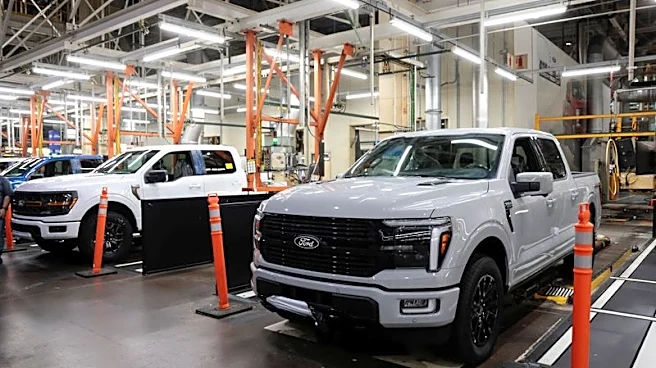
This potential shift in rankings signifies a notable change in the competitive landscape of the U.S. auto market, traditionally dominated by the 'Big Three' (GM, Ford, and Chrysler). Hyundai Motor Group's rise, driven by increased hybrid vehicle sales, indicates a consumer preference for transitional alternatives as the adoption of electric vehicles progresses slower than initially expected. This highlights Hyundai's ability to accurately capture evolving market demand. Conversely, Ford's sales decline is primarily linked to supply chain disruptions, specifically a fire at a key parts supplier last year that impacted its popular pickup truck models. This divergence in performance underscores the impact of strategic product offerings and supply chain resilience on market share in the highly competitive U.S. automotive industry.
What's Next?
The finalization of the third-quarter sales figures will confirm whether Hyundai Motor Group officially overtakes Ford in U.S. quarterly sales. This development could prompt Ford to re-evaluate its production strategies and supply chain management to mitigate future disruptions and regain market share. For Hyundai, continued focus on its hybrid lineup and potentially further expansion in this segment could solidify its position among the top automakers in the U.S. The broader automotive market will likely continue to observe consumer trends regarding hybrid versus electric vehicles, influencing future product development and investment strategies across the industry. Automakers will also be closely monitoring supply chain stability and geopolitical factors that could impact manufacturing and sales.
Beyond the Headlines
The projected shift in U.S. auto sales rankings reflects deeper trends in consumer behavior and manufacturing economics. The preference for hybrids suggests a pragmatic approach by consumers facing high fuel costs and a slower-than-anticipated EV transition, highlighting the importance of diverse powertrain options. Ford's acknowledgment that manufacturing vehicles in South Korea is more advantageous due to tariffs, exchange rates, labor costs, and supply chains points to the complex global economic factors influencing automotive production and pricing. This situation could lead to increased scrutiny of international trade policies and their impact on domestic manufacturing, potentially influencing future investment decisions and job creation within the U.S. automotive sector. It also underscores the ongoing challenge for legacy automakers to adapt to rapidly changing market dynamics and global economic pressures.