





What's Happening?
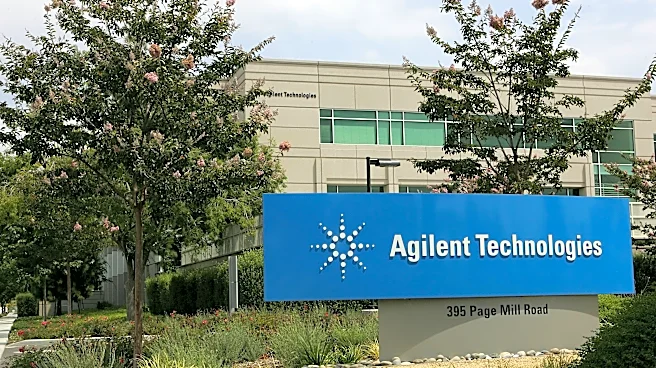
Agilent Technologies Inc. announced robust financial results for its fourth quarter and full fiscal year 2026, ending October 31, 2026. The company reported fourth-quarter revenue of $2.04 billion, marking a 9.6% reported growth and an 8.3% core growth compared
to the same period in fiscal year 2025. GAAP net income for Q4 stood at $451 million, or $1.59 per share, an increase from $434 million, or $1.53 per share, in Q4 2025. Non-GAAP net income reached $526 million, or $1.86 per share, including a $20 million net benefit from tariff refunds. For the full fiscal year 2026, Agilent achieved $7.55 billion in revenue, an 8.7% reported growth and 6.6% core growth over fiscal year 2025. Annual GAAP net income was $1,457 million, or $5.15 per share. The Life Sciences and Diagnostics Markets Group (LDG) saw Q4 revenue of $843 million, up 12%, while the Agilent CrossLab Group (ACG) reported $799 million, up 6%. The Applied Markets Group (AMG) grew 13% to $398 million in Q4. Agilent CEO Padraig McDonnell attributed the strong performance to effective execution and the benefits of the Ignite Operating System.
Why It's Important?
Agilent's strong financial performance underscores the continued demand for analytical and clinical laboratory technologies, which are critical across various sectors including pharmaceuticals, diagnostics, and applied markets. The company's growth, particularly in its core segments, indicates a healthy and expanding market for its instruments, software, and services. The increase in revenue and net income, coupled with positive guidance for fiscal year 2027, suggests sustained innovation and market leadership. This performance is vital for investors, signaling stability and growth potential in the life sciences and diagnostics industries. The company's ability to leverage its 'Ignite Operating System' for both top-line and bottom-line improvements highlights effective operational strategies. Furthermore, Agilent's focus on customer-led innovation and its readiness to capture opportunities in emerging areas like AI and autonomous labs position it as a key player in the evolving scientific and healthcare technology landscape, contributing to advancements in research and development across the U.S. and globally.
What's Next?
Agilent Technologies has provided an optimistic outlook for fiscal year 2027, projecting revenue in the range of $8.00 billion to $8.15 billion, which represents a 6.0% to 8.0% reported growth and 5.0% to 7.0% core growth. Non-GAAP EPS for FY27 is expected to be between $6.73 and $6.86, indicating a 7.3% increase at the midpoint compared to FY26. For the first quarter of fiscal year 2027, revenue is anticipated to be between $1.96 billion and $2.00 billion, with non-GAAP EPS projected in the range of $1.54 to $1.57 per share. The company plans to continue its focus on commercial and operational execution, customer-led innovation, and deep customer intimacy to outpace its end markets. Agilent aims to capture existing and emerging opportunities, including those driven by artificial intelligence and the development of autonomous labs, to further solidify its position in the connected lab ecosystem. These projections suggest continued investment in research and development, potential strategic acquisitions, and ongoing efforts to enhance operational efficiencies.
Beyond the Headlines
Agilent's consistent growth and strategic focus on emerging technologies like AI and autonomous labs point to a broader transformation within the scientific and clinical laboratory sectors. The integration of AI into laboratory processes could lead to significant advancements in data analysis, experimental design, and diagnostic accuracy, potentially accelerating drug discovery and personalized medicine. The push towards autonomous labs signifies a shift towards more efficient, automated, and less human-dependent research environments, which could reduce operational costs and increase reproducibility of results. This trend has profound implications for the workforce, requiring new skill sets in data science and automation. Ethically, the increased reliance on AI in diagnostics and research will necessitate robust validation and regulatory frameworks to ensure accuracy, fairness, and patient safety. Agilent's role in providing the foundational technologies for these advancements positions it at the forefront of shaping the future of scientific inquiry and healthcare delivery.