
What's Happening?
China's Ministry of Commerce has launched an anti-dumping investigation into imports of p-Nitrotoluene from the European Union. This action follows an application from China's domestic industry, which
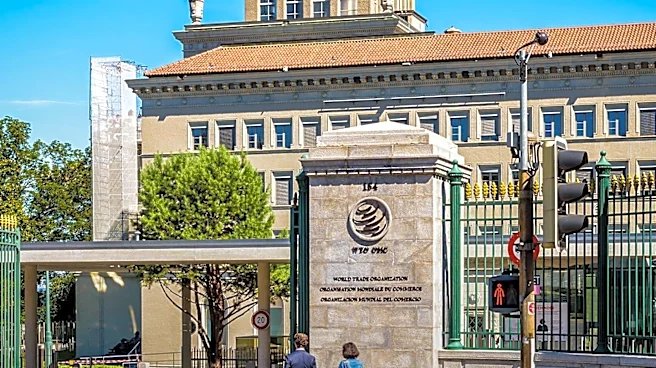
alleges that cheap imports from the EU are causing significant damage to their production and operations. The investigation will determine if the Chinese market is being flooded with p-Nitrotoluene sold at unfairly low prices. This move by Beijing comes in the context of an ongoing trade dispute, as the EU previously initiated an investigation in September into imports of polyvinyl chloride from several countries, including China. Chinese authorities have consistently rejected claims that their manufacturers' competitiveness is driven by state support and have indicated potential retaliatory measures against EU actions that restrict Chinese companies. World Trade Organization rules permit importing countries to impose additional tariffs, known as anti-dumping duties, if an investigation confirms that inexpensive imports are harming domestic producers.
Why It's Important?
This anti-dumping investigation by China holds significant implications for international trade relations, particularly between China and the European Union. It signals a potential escalation in trade tensions, as both economic blocs are increasingly employing trade defense measures. For U.S. businesses and policymakers, this development highlights the growing trend of protectionist actions globally, which could impact supply chains and market access. If China imposes tariffs, it could disrupt the global chemical industry, potentially leading to price increases or shifts in sourcing for companies that rely on p-Nitrotoluene. The tit-for-tat nature of these investigations also creates an environment of uncertainty, making it challenging for businesses to plan long-term investments and trade strategies. The U.S., as a major global economic player, is indirectly affected by such disputes, as they can influence global trade flows, commodity prices, and the overall stability of the international trading system.
What's Next?
The investigation by China's Ministry of Commerce will proceed to determine whether anti-dumping duties will be imposed on p-Nitrotoluene imports from the EU. This process is likely to involve detailed assessments of pricing, production costs, and market impact. Concurrently, European Commissioner for Trade Maroš Šefčovič is scheduled to visit Beijing on October 8-9 to co-chair a meeting of the EU-China Trade and Investment Council and meet with Minister of Commerce Wang Wentao. These discussions will be crucial in addressing the broader trade tensions and seeking assurances regarding market access and fair competition. The outcome of these negotiations and the anti-dumping investigation could lead to either a de-escalation of trade disputes or further retaliatory measures from either side, potentially impacting a wider range of goods and industries. Businesses involved in trade between China and the EU will closely monitor these developments for potential changes in trade policies and tariffs.
Beyond the Headlines
The current anti-dumping investigation is more than just a dispute over a single chemical; it reflects a deeper struggle for economic influence and fair trade practices between major global powers. The EU's increased use of trade defense investigations, with a 45% rise in imports from China over five years and a trade deficit of €1 billion a day, underscores a growing concern about market imbalances and alleged unfair competition. China's response, including this investigation and threats of retaliation, indicates its determination to protect its domestic industries and challenge what it perceives as protectionist measures from the EU. This dynamic could lead to a more fragmented global trading system, where regional blocs increasingly prioritize domestic industries over free trade principles. The long-term implications include potential shifts in global manufacturing hubs, increased costs for consumers, and a more complex regulatory landscape for multinational corporations, ultimately affecting global economic stability and cooperation.