





What's Happening?
Indonesia's Ministry of Creative Economy is actively promoting the development of local audio technology to foster innovation and create new career opportunities within the creative sector. The ministry has highlighted Seruniaudio, a Yogyakarta-based
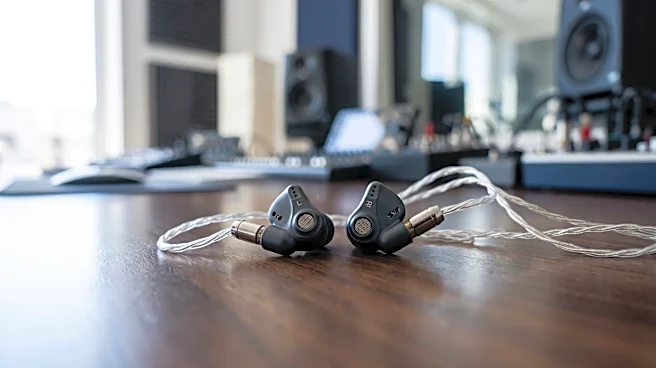
manufacturer of audio devices and microphones, whose products have successfully penetrated international markets, including Japan, Turkey, France, and the United States. To further this initiative, the ministry collaborated with Seruniaudio to host the "Creative Sound Lab: Exploring Sound Ecology & Immersive Experiences" workshop in Yogyakarta from November 18–19, 2026. This event aimed to introduce young people, including artists and cultural practitioners, to advancements in sound technology and its diverse applications. Innovations showcased at the workshop included Binaural In-Ear Microphones (BIEM), an earphone-like spatial audio system designed to capture sound from multiple directions for immersive audio productions. According to Dandy Yudha Feryawan, the ministry’s Director of Technology Creativity, such initiatives are expected to create opportunities for artists, students, and sound engineers to enhance their skills and explore new professions.
Why It's Important?
The expansion of Indonesian local audio technology, particularly Seruniaudio's presence in the U.S. market, signifies a growing global interconnectedness in the technology and creative sectors. For the U.S., this means increased access to diverse audio innovations and potential for collaboration or competition within its own audio technology industry. The promotion of spatial audio technology, such as Binaural In-Ear Microphones, could influence how immersive audio content is produced and consumed in the U.S., impacting industries ranging from entertainment and gaming to virtual reality. The Indonesian government's strategic focus on nurturing its creative economy through technology also serves as a model for other nations, potentially encouraging similar initiatives that could lead to new international partnerships and technological exchanges. This development highlights the increasing importance of sound technology in various applications, from artistic expression to practical professional tools, and its role in driving economic growth.
What's Next?
The Indonesian Ministry of Creative Economy plans to continue its efforts to integrate technological innovation with art and culture, aiming to expand growth opportunities across Indonesia's creative subsectors. The success of Seruniaudio in reaching international markets, including the U.S., may encourage other Indonesian tech companies to pursue global expansion. Future workshops and collaborative programs are likely to be organized to further educate and train young professionals in sound technology, potentially leading to more advanced innovations and specialized skill sets. For the U.S. market, this could mean a continued influx of diverse audio technologies and creative tools, potentially fostering new trends in audio production and consumption. The ongoing development of spatial audio technology, as demonstrated by BIEM, suggests a future where immersive audio experiences become more commonplace and accessible.
Beyond the Headlines
The initiative by Indonesia's Ministry of Creative Economy to promote local audio technology, exemplified by Seruniaudio's international reach, underscores a broader global trend of nations leveraging technology to bolster their creative economies. This move not only aims to create economic opportunities but also to preserve and evolve cultural expressions through modern technological mediums. The emphasis on 'sound ecology' and understanding one's environment through listening, as highlighted by Seruniaudio CEO and Co-Founder Cucu Cretta, suggests a deeper philosophical approach to technology integration—one that values sensory perception and environmental awareness in the creative process. This could inspire a more holistic approach to technology development in other countries, including the U.S., where the ethical and cultural implications of technological advancements are increasingly being considered. The blend of art, culture, and technology also points to a future where interdisciplinary skills are highly valued, fostering a new generation of professionals who can bridge these traditionally separate domains.