





What's Happening?
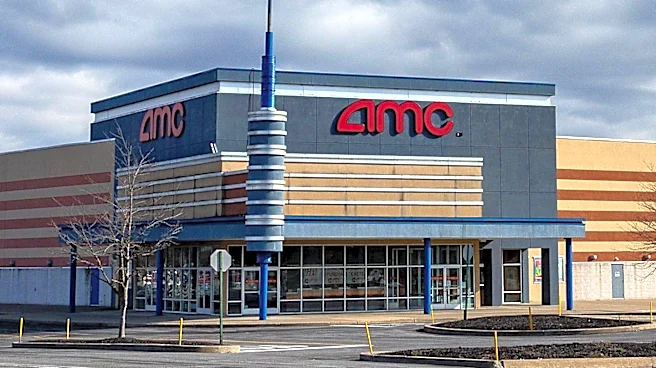
AMC Entertainment Holdings Inc. is experiencing a significant uptick in its stock, trading up by 10.71%, driven by a combination of strategic initiatives. The company is undertaking a major balance sheet refinancing, tendering for $360 million of its 7.50%
secured notes due 2029. Concurrently, AMC plans to issue $2 billion of new first-lien notes due 2031, arrange an $850 million first-lien term loan, and commit to a $1.12 billion second-lien term loan. This comprehensive refinancing aims to extend debt maturities and reduce older, more expensive debt. In addition to financial restructuring, AMC is launching Leawood Films, a new low-capex distribution arm. This venture will focus on fully-financed small and mid-budget movies, utilizing AMC's existing theater infrastructure to fill unused screen time without incurring significant production risks. Initial releases for Leawood Films are slated for 2027–2028. Furthermore, AMC Theatres has secured exclusive rights to screen the 2026 Rocket League World Championship Finals live at 50 U.S. locations, expanding its esports content offerings.
Why It's Important?
This strategic pivot by AMC Entertainment is crucial for its long-term viability and market perception. The debt refinancing efforts are designed to alleviate immediate financial pressures by pushing out maturity dates and lowering interest expenses, which is vital for a company that has faced significant financial challenges. This move signals a proactive approach to managing its substantial liabilities, which currently stand around $9.50 billion. The launch of Leawood Films represents an innovative strategy to diversify revenue streams beyond traditional movie distribution. By acting as a distribution and marketing partner for independent films, AMC can leverage its extensive network of theaters and marketing capabilities without the high costs and risks associated with film production. This could transform AMC from solely a theater chain into a more integrated entertainment content platform. The expansion into esports content, exemplified by the Rocket League World Championship Finals, is also significant as it targets a younger, digitally native audience, potentially bringing new demographics into theaters and positioning AMC as an event hub, not just a cinema.
What's Next?
The immediate next steps for AMC involve the successful execution of its debt refinancing plan, which is expected to be completed in the near term. The market's positive reaction, with a premarket stock pop of approximately 3% on the news, suggests investor confidence in this financial restructuring. For Leawood Films, the focus will be on identifying and securing content for its initial releases in 2027–2028. This will involve building relationships with independent filmmakers and leveraging AMC's distribution expertise. The success of this new venture will depend on its ability to consistently attract quality films and audiences. The exclusive screening of the 2026 Rocket League World Championship Finals will serve as a test case for AMC's broader strategy to integrate esports and other live events into its theater offerings. Future expansions in this area could include more gaming events, concerts, and other alternative content. The company will also continue to benefit from its role in National CineMedia’s Noovie pre-show, maintaining its position as a core advertising platform.
Beyond the Headlines
AMC's multifaceted strategy reflects a broader trend in the entertainment industry where traditional businesses are adapting to changing consumer habits and technological advancements. The move into content distribution with Leawood Films, while low-capex, signifies a blurring of lines between exhibition and production, a model that could be replicated by other theater chains seeking to maximize asset utilization. This could lead to a more diverse range of films reaching audiences, particularly independent and mid-budget productions that often struggle for wide distribution. The embrace of esports content also highlights the growing convergence of gaming and traditional entertainment venues. As gaming continues to grow in popularity, theaters could become key community hubs for live esports events, offering a unique social viewing experience that cannot be replicated at home. This diversification could help future-proof the cinema industry against the challenges posed by streaming services and evolving audience preferences, creating a more resilient and dynamic entertainment ecosystem.