







What's Happening?
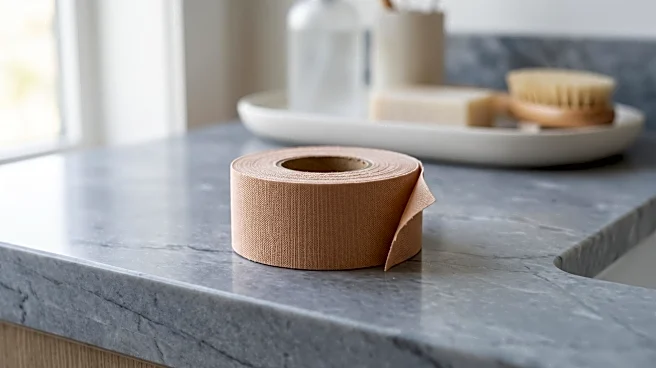
Dermatology Times is examining the viral social media trend of face taping, which claims to prevent or smooth facial wrinkles. This trend, popular on platforms like TikTok and Instagram, involves applying adhesive tape to areas prone to expression lines,
such as the forehead, glabella, and crow's feet, often worn overnight. Proponents suggest that this practice can physically restrict skin movement, thereby preventing new lines from forming, softening existing ones, and even 'training' facial muscles to move less. While repetitive facial movements do contribute to dynamic wrinkles, and temporarily flattening the skin can make lines appear smoother, the scientific evidence supporting the long-term efficacy of face taping in altering underlying muscular activity or structural aging processes is limited.
Why It's Important?
The proliferation of unverified skincare trends on social media, like face taping, poses a significant challenge for U.S. dermatologists and consumers. Patients are increasingly bringing these viral claims into exam rooms, seeking professional validation or advice. This trend highlights a growing gap between anecdotal social media 'hacks' and evidence-based dermatological practices. For the U.S. skincare industry, it means navigating a landscape where consumer decisions are heavily influenced by online content, potentially leading to the misuse of products, unrealistic expectations, or even adverse skin reactions. Dermatologists are tasked with debunking myths and educating the public, ensuring that patients receive safe and effective treatments rather than relying on unproven methods.
What's Next?
Dermatology professionals and organizations will likely continue to engage in 'myth-busting' efforts to counter unproven social media skincare trends. This will involve providing clear, evidence-based information to patients and the public, potentially through educational campaigns or direct responses to viral claims. The skincare industry may also see a demand for products that offer similar benefits to these trends but are backed by scientific research. Consumers, in turn, will need to develop greater critical thinking skills regarding online health and beauty advice, seeking information from credible sources rather than relying solely on social media influencers. Further research into the actual effects of such trends could also be initiated to provide definitive answers.
Beyond the Headlines
The rise of face taping and similar social media skincare trends reflects a broader cultural phenomenon: the democratization of information coupled with a potential decline in trust in traditional expert sources. In an era where anyone can become an 'expert' online, the challenge lies in distinguishing credible advice from misinformation. This trend also speaks to the pervasive desire for accessible, low-cost beauty solutions, often driven by aesthetic ideals promoted on social media. The ethical implications extend to the responsibility of social media platforms to moderate health and beauty claims, and the need for influencers to disclose potential conflicts of interest or lack of professional qualifications. Ultimately, it underscores the ongoing tension between self-care empowerment and the potential for harm when medical advice is sought from non-experts.