



What's Happening?
Massimo Dutti, a sister brand to the Spanish retailer Zara, has significantly climbed the ranks in the fashion industry's 'Hottest Brands' list, reaching number 13. This placement positions it between established luxury brands like Coach and The Row.
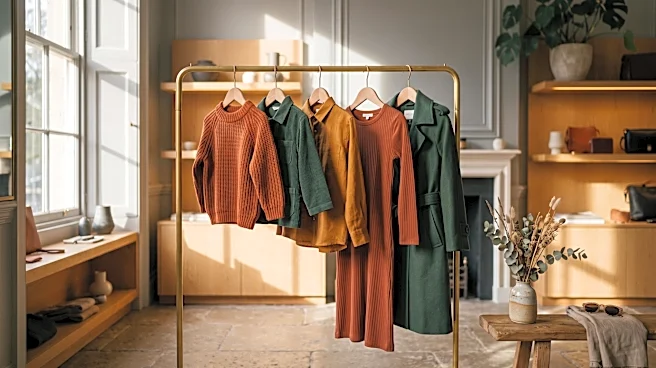
The brand's growing popularity is not only reflected in its consistent appearance on the Lyst Index, a quarterly report tracking fashion data, but also through celebrity endorsements. Notable figures such as Bella Hadid and Kaia Gerber have been seen wearing Massimo Dutti items, contributing to its increased visibility and demand. The brand is recognized for offering a range of transitional staples suitable for autumn/winter, alongside festive options, indicating a focus on versatile and sensible fashion choices rather than fleeting trends. This rise suggests a shift in consumer preferences towards more discerning purchases and quality basics.
Why It's Important?
The ascent of Massimo Dutti in the 'Hottest Brands' list signifies a notable trend in the U.S. retail landscape, reflecting evolving consumer behavior and preferences. As a sister brand to Zara, its success could influence the strategies of other fast-fashion retailers and their parent companies. The emphasis on 'sensible basics' and 'transitional staples' suggests a potential move away from rapid, trend-driven consumption towards more sustainable and versatile wardrobe choices among U.S. shoppers. This shift could impact inventory management, design processes, and marketing efforts across the fashion industry. For consumers, it highlights a growing appreciation for quality and longevity in clothing, potentially leading to more thoughtful purchasing decisions. The brand's celebrity backing also underscores the continued power of influencer marketing in shaping consumer demand and brand perception within the U.S. market.
What's Next?
The continued rise of Massimo Dutti could prompt its parent company, Inditex (which also owns Zara), to further invest in and expand the brand's presence in the U.S. market. This might include opening more standalone stores, increasing its online footprint, or enhancing its marketing campaigns to capitalize on its growing popularity. Other U.S. fashion retailers may observe Massimo Dutti's success and adapt their own strategies to incorporate more 'sensible basics' and transitional pieces into their collections, potentially leading to a broader industry trend. Consumers can expect to see more accessible, high-quality staple pieces becoming prominent in fashion offerings. The brand's sustained presence on the Lyst Index will be a key indicator of whether this trend continues or if it's a temporary surge in demand.
Beyond the Headlines
Massimo Dutti's success points to a deeper cultural shift in how U.S. consumers approach fashion. In an era often characterized by rapid trend cycles and disposable clothing, the brand's focus on enduring styles and quality basics suggests a growing desire for more mindful consumption. This could have long-term implications for the environmental impact of the fashion industry, as consumers potentially opt for fewer, higher-quality items over numerous, short-lived pieces. The brand's ability to blend high-street accessibility with a more premium aesthetic also challenges traditional distinctions between fast fashion and luxury, potentially blurring these lines further. This evolution in consumer values could encourage other brands to re-evaluate their production models and marketing messages, emphasizing durability and timelessness over fleeting trends.