






What's Happening?
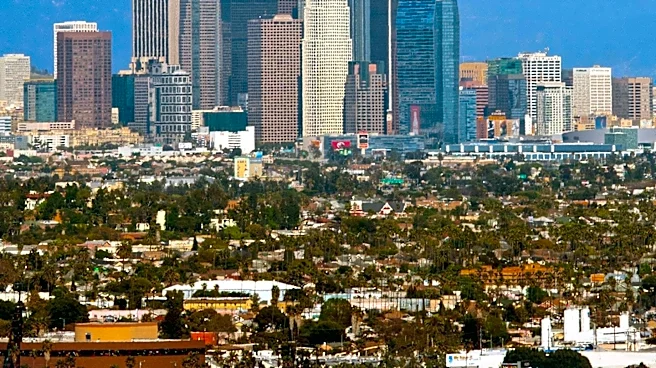
Southern California Gas Company (SoCalGas) officially celebrated the opening of its new headquarters at 2CAL in downtown Los Angeles. Los Angeles Mayor Karen Bass joined public officials, business leaders, and community representatives for a ceremony
marking this significant relocation. The move signifies a new chapter for the company, which has maintained a presence in Los Angeles for nearly 160 years, having been founded as the Los Angeles Gas Company in 1867. SoCalGas will occupy 2CAL at 350 S. Grand Ave., serving as the building's anchor tenant. This relocation keeps over 700 SoCalGas employees within the city's central business district, reinforcing the company's commitment to downtown Los Angeles. Speakers at the event, including Mayor Bass and Caroline Winn, chair of the board of SoCalGas, emphasized the company's long-standing role in powering the city's growth and its continued dedication to the communities it serves. Assemblymember Mark González and leaders from the Central City Association of Los Angeles and the Los Angeles Area Chamber of Commerce also lauded SoCalGas's contributions to the local economy and community.
Why It's Important?
The relocation of SoCalGas's headquarters is important for several reasons, primarily its impact on the economic vitality of downtown Los Angeles. By retaining over 700 jobs in the central business district, SoCalGas contributes significantly to the local economy, supporting ancillary businesses and services in the area. This move underscores a continued corporate investment in urban centers, which can help drive revitalization efforts and maintain a vibrant downtown ecosystem. For SoCalGas, a company with a nearly 160-year history in Los Angeles, this new headquarters reinforces its long-term commitment to the city and its customer base of over 21 million consumers across Central and Southern California. The presence of Mayor Karen Bass and other key officials at the celebration highlights the strong public-private partnership and the perceived importance of SoCalGas as a critical utility provider and corporate citizen in the region. This stability and investment can foster confidence among other businesses and residents in the future of downtown Los Angeles.
What's Next?
Following the official celebration, SoCalGas will continue to integrate its operations into the new 2CAL headquarters. The company's focus will likely remain on its mission of providing safe, reliable, and affordable energy to its extensive customer base across Central and Southern California. As an anchor tenant, SoCalGas's presence is expected to contribute to the ongoing vibrancy and economic activity of the downtown Los Angeles area. Future developments may include further community engagement initiatives, as highlighted by Assemblymember Mark González, who noted SoCalGas's history of investing in neighborhoods and supporting local organizations. The company, as a subsidiary of Sempra, will also continue to align with broader corporate strategies for energy delivery and innovation. The move could also serve as a catalyst for other businesses considering relocation or expansion within downtown Los Angeles, seeing SoCalGas's commitment as a positive indicator for the area's economic health.
Beyond the Headlines
Beyond the immediate economic impact, SoCalGas's decision to maintain its headquarters in downtown Los Angeles reflects a broader trend of companies reaffirming their commitment to urban cores, even in an era of remote work flexibility. This move signals a belief in the enduring value of physical presence for corporate identity, collaboration, and community engagement. It also highlights the critical role of established utility companies in the fabric of a major metropolitan area, not just as service providers but as significant employers and community partners. The historical context of SoCalGas, founded in 1867, underscores the long-term evolution of urban infrastructure and the continuous adaptation of essential services to meet the demands of a growing population. This relocation can be seen as a strategic decision to remain at the heart of the region it serves, fostering closer ties with civic leaders and the diverse communities that rely on its services, thereby reinforcing its social license to operate.