






What's Happening?
Sam Toia, President of the Illinois Restaurant Association, has voiced concerns regarding the inconsistent enforcement of rules pertaining to decorative string lights at outdoor dining areas in Chicago. His comments follow a city crackdown on Lush Wine
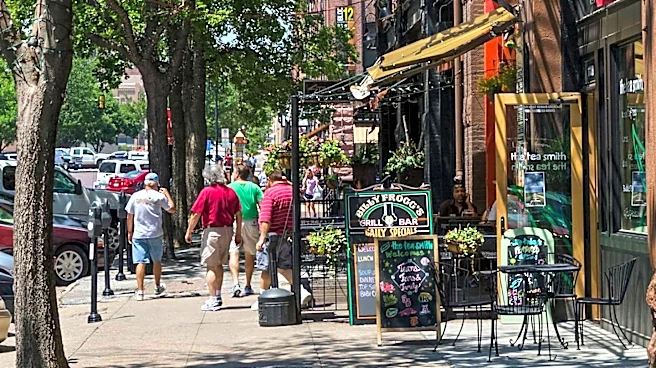
& Spirits in Roscoe Village, which was ordered to remove its outdoor lights after a complaint. Owner Mitch Einhorn stated he was unaware of any law prohibiting such lights, despite holding a sidewalk cafe permit. Many other establishments across the city, including dozens along Lincoln Avenue, West Fulton Market, and Randolph Street, continue to use similar lighting without issue. Toia argues that the complaint-driven system employed by the Department of Business Affairs and Consumer Protection (BACP) creates an unfair environment for restaurants. The city cites Chapter 10-29 of the Municipal Code of Chicago, which governs 'wires, pipes, cables and conduits on, under or over public property,' as the basis for the ban. However, the ordinance also suggests permits can be obtained, though Einhorn was reportedly told no application process exists.
Why It's Important?
This issue highlights a significant challenge for Chicago's restaurant industry, which is already grappling with rising food, labor, and operating costs. The uneven application of city ordinances creates an unpredictable regulatory environment, potentially penalizing businesses based on arbitrary complaints rather than consistent standards. Outdoor dining, enhanced by ambient lighting, contributes to the aesthetic appeal and customer experience, which is crucial for attracting patrons and supporting local businesses. The lack of a clear permit process for these lights further complicates matters, leaving restaurant owners in a state of uncertainty. This situation could deter investment in outdoor dining spaces and negatively impact the city's vibrant culinary scene, which relies on such amenities to draw customers and compete with other metropolitan areas.
What's Next?
Ald. Matt Martin's office has indicated they are working with BACP to find a solution, which could involve procedural changes or new legislation to allow string lights for sidewalk cafes. Ald. Debra Silverstein, who chairs the City Council committee overseeing BACP, plans to review the issue with her colleagues to explore legislative options that would provide clarity and protect small business owners while maintaining safety standards. BACP's Deputy Commissioner, Elisa Sledzinska, maintains that the department is simply enforcing the existing Municipal Code. The outcome could lead to either a more standardized permit process for outdoor lighting or a legislative amendment to the city's code, aiming to balance safety regulations with the needs of the restaurant industry. Stakeholders will be closely watching for these potential changes.
Beyond the Headlines
The debate over sidewalk cafe lights in Chicago extends beyond mere aesthetics; it touches upon broader themes of urban planning, small business support, and the interpretation of municipal codes. The 'European feeling' that Sam Toia describes, fostered by outdoor lighting, contributes to the city's cultural ambiance and quality of life. The current situation underscores a tension between rigid regulatory frameworks and the dynamic needs of urban commerce and culture. It also raises questions about the effectiveness and fairness of complaint-driven enforcement, which can lead to arbitrary outcomes and disproportionately affect businesses. A resolution that provides clear guidelines and a streamlined process could serve as a model for other cities facing similar challenges, promoting a more business-friendly environment while preserving public safety and urban aesthetics.