
What's Happening?
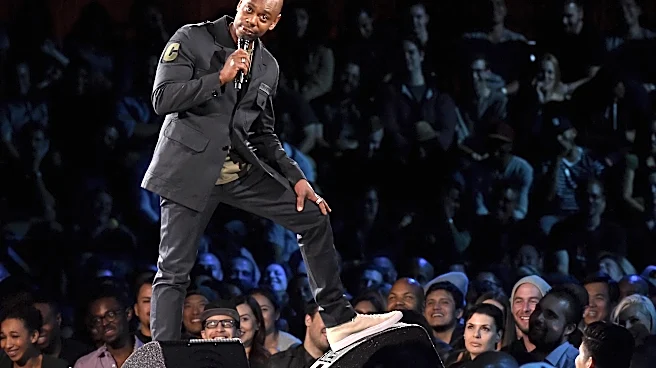
Comedian Tony Hinchcliffe recently expressed frustration with his audience during an episode of his podcast, 'Kill Tony,' after a race-related joke failed to land as expected. Hinchcliffe attributed the audience's reluctance to laugh to Dave Chappelle,
stating that Chappelle had 'made it weird this week.' This comment follows leaked footage from Chappelle's November 7 show at Madison Square Garden, where Chappelle made controversial remarks. Specifically, Chappelle joked about the 'murder' of Charlie Kirk, saying, 'Ever since that guy Charlie Kirk got murdered — and I shouldn't say this publicly — but I feel better.' This remark, along with another line about Kirk 'looking up at us right now, laughing so hard he can't breathe,' drew comparisons to a controversial joke Hinchcliffe made earlier this year at 'The Roast of Kevin Hart' regarding George Floyd. The leaked footage and Chappelle's comments have sparked widespread criticism from right-wing commentators, including Ben Shapiro and Elon Musk, leading to debates about the boundaries of provocative humor.
Why It's Important?
This incident highlights the ongoing tension and evolving landscape within stand-up comedy regarding controversial humor and audience reception. Hinchcliffe's comments suggest a perceived chilling effect on comedic freedom, where comedians feel audiences are becoming overly sensitive or hesitant to engage with edgy material. The backlash against Chappelle's jokes, particularly those referencing sensitive topics like death and racial injustice, underscores the increasing scrutiny comedians face in the digital age, where leaked footage can quickly go viral and spark widespread debate. This situation also reflects a broader cultural conversation about cancel culture and the limits of free speech in entertainment, impacting how comedians craft their material and how audiences interpret it. The involvement of prominent figures like Ben Shapiro and Elon Musk further amplifies the discussion, drawing it into wider political and social discourse.
What's Next?
The immediate aftermath may see continued discussion and debate within comedy circles and on social media regarding the role of controversial humor. Other comedians might weigh in on the perceived shift in audience behavior or defend Chappelle's comedic style, while critics may continue to call for greater accountability for offensive jokes. It is possible that Chappelle or Hinchcliffe may address the controversy more directly in future performances or podcast episodes, potentially offering further clarification or doubling down on their comedic approaches. The incident could also influence how comedy clubs and streaming platforms approach content moderation and the promotion of stand-up specials, potentially leading to more cautious programming decisions or increased pressure on comedians to self-censor. The ongoing public discourse will likely shape audience expectations and the creative choices of comedians moving forward.
Beyond the Headlines
This controversy delves into deeper questions about the social responsibility of comedians and the evolving nature of humor in a highly polarized society. The comparison between Chappelle's and Hinchcliffe's jokes, both touching on sensitive deaths, raises ethical considerations about punching up versus punching down, and whether certain topics are inherently off-limits for comedic treatment. The rapid spread of the leaked footage and the subsequent public outcry also underscore the power of social media in shaping public opinion and holding public figures accountable, sometimes outside traditional media channels. This incident could contribute to a broader re-evaluation of comedic norms, prompting artists to consider the potential impact of their words beyond immediate laughter. It also highlights the generational and ideological divides in what is considered acceptable humor, reflecting a larger cultural struggle over values and sensitivities.