



What's Happening?
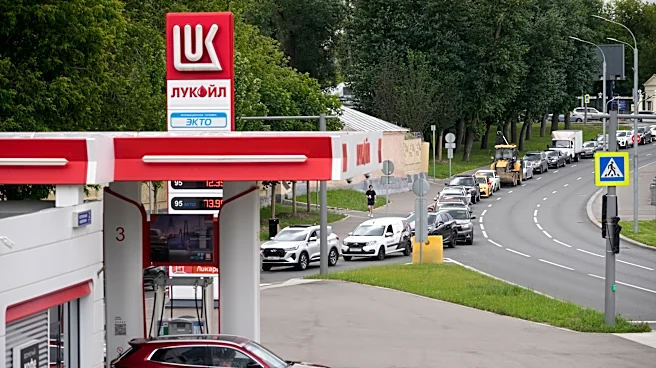
A U.S.-led consortium has reached an agreement to acquire Lukoil International GmbH (LIG), which encompasses the non-Russian oil and gas assets of Russia's PJSC Lukoil. The deal is contingent on conditional approval from the U.S. Treasury Department's
Office of Foreign Assets Control (OFAC). The consortium is spearheaded by investment firm Eldridge and includes the U.S. International Development Finance Corporation (DFC), UAE-based Catena Investment Holding, and Xtellus Partners, with Citi serving as the lead financial adviser. LIG's portfolio includes upstream operations across 11 countries, producing approximately 350,000 boed, three refineries with a combined capacity of about 350,000 bpd (Burgas in Bulgaria, Zeeland in the Netherlands, and Petrotel in Romania), the trading business LITASCO, and over 2,000 retail stations in 16 countries. The acquisition will be paid for with restricted Russian shares of PJSC Lukoil and other Russian companies, rather than cash, to prevent direct financial benefit to Russia. The sale proceeds will be held in a restricted custodial account for five years or until sanctions are lifted. DFC will obtain an ownership stake on behalf of the U.S. government at no upfront cost, and LIG will be fully separated from PJSC Lukoil upon closing.
Why It's Important?
This acquisition is a significant development in global energy security and international relations, particularly in the context of U.S. sanctions against Russia. By bringing Lukoil's international assets under American and allied ownership, the deal aims to strengthen energy security and stabilize operations, including restoring full refining capacity. This move is crucial for reducing Russia's influence in the global energy market and ensuring the continued supply of oil and gas to various nations, especially in Europe. For the U.S. government, DFC's ownership stake represents a strategic effort to secure critical energy infrastructure without direct financial outlay, aligning with broader foreign policy objectives. The share-swap payment mechanism is innovative, designed to circumvent sanctions while facilitating a major asset transfer. This transaction also sets a precedent for how sanctioned entities' assets might be managed and transferred in future geopolitical scenarios, impacting international investment and trade policies.
What's Next?
The immediate next step for this deal is securing the conditional approval from the U.S. Treasury Department's OFAC, along with completing due diligence and other regulatory approvals. Once approved, the consortium plans to prioritize stabilizing operations and bringing full refining capacity back online across LIG's assets. The separation of LIG from PJSC Lukoil will be a critical phase, ensuring that the acquired entities operate independently. The proceeds from the sale, held in a restricted custodial account, will remain inaccessible to Russia for five years or until sanctions are lifted, which will be a closely monitored aspect of the agreement. The long-term implications will involve the consortium's ability to efficiently manage and integrate these diverse international assets, ensuring their profitability and contribution to global energy stability. This deal could also influence future strategies for other companies with assets in sanctioned regions.
Beyond the Headlines
This transaction extends beyond a simple business acquisition; it represents a complex geopolitical maneuver aimed at reshaping the global energy landscape in response to international sanctions. The innovative use of restricted Russian shares as payment highlights the creative financial engineering employed to navigate stringent sanctions regimes. This approach could serve as a blueprint for future transactions involving assets tied to sanctioned entities, potentially influencing international finance and legal frameworks. Furthermore, the DFC's involvement underscores a growing trend of government-backed investment in strategic industries to achieve foreign policy goals, blurring the lines between state and private sector interests. The deal also raises questions about the long-term impact on energy markets, particularly in regions where Lukoil had a significant presence, and how the new ownership will affect local economies, employment, and environmental policies. The successful integration and operation of these assets under new management will be a critical test of this complex international arrangement.