








What's Happening?
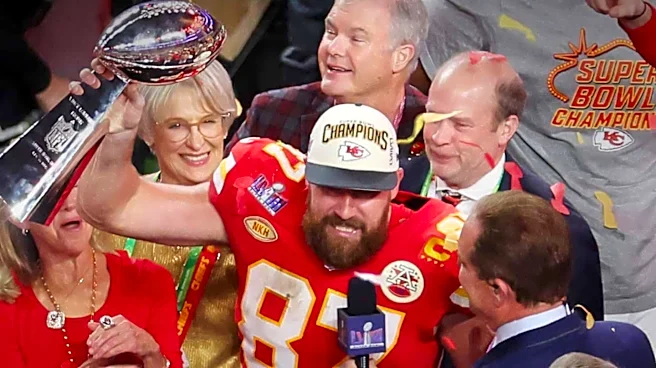
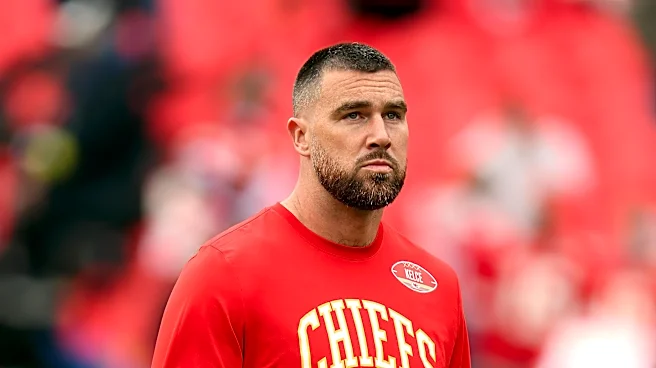
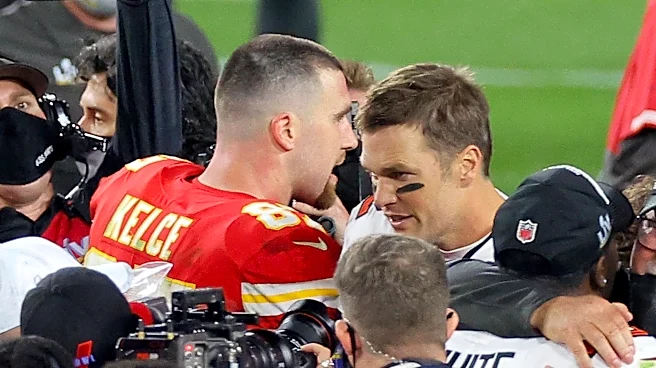
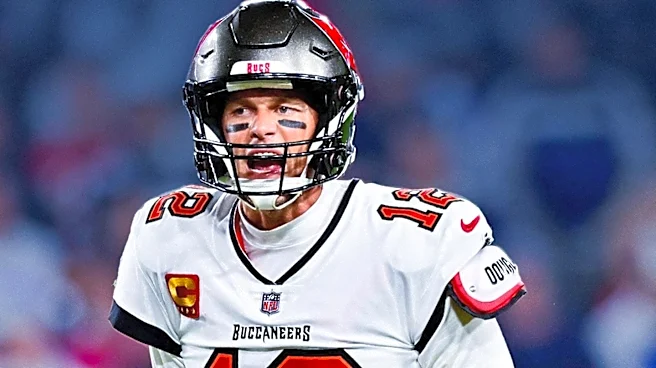
Tom Brady, the former NFL quarterback, recently appeared on the New Heights podcast with Travis and Jason Kelce, where he drew a comparison between the drama surrounding NFL wide receivers and the reality TV show 'Real Housewives.' Brady humorously noted
that the drama among wide receivers has been consistent since his rookie year in 2000. He explained that wide receivers often appear more animated and outspoken due to their unique role in the offense, which requires them to stay engaged despite not always being directly involved in plays. Brady highlighted that while other positions like running backs and linemen are consistently engaged, wide receivers must maintain focus and commitment even when they do not receive the ball. This dynamic can lead to frustration and drama, as receivers' success and compensation are closely tied to their involvement in plays.
Why It's Important?
Brady's comments shed light on the unique pressures faced by wide receivers in the NFL. The position demands a high level of performance and visibility, yet it is heavily dependent on the quarterback and offensive strategy. This can create tension and drama, as receivers strive to balance personal success with team dynamics. Understanding this dynamic is crucial for teams as they manage player relationships and build cohesive offensive units. The comparison to 'Real Housewives' underscores the entertainment value and public interest in these off-field dynamics, which can impact team morale and performance. Brady's insights offer a veteran perspective on managing these challenges, which could influence how teams approach player management and communication strategies.
What's Next?
As the NFL continues to evolve, teams may need to develop new strategies to address the unique challenges faced by wide receivers. This could involve enhancing communication between quarterbacks and receivers, adjusting offensive schemes to better utilize receiver talents, or providing additional support to help players manage the psychological aspects of their roles. The ongoing dialogue about receiver drama may also prompt broader discussions about player satisfaction and team culture in the league. Stakeholders, including coaches and team executives, will likely continue to explore ways to foster a positive environment that minimizes drama and maximizes performance.