









What's Happening?
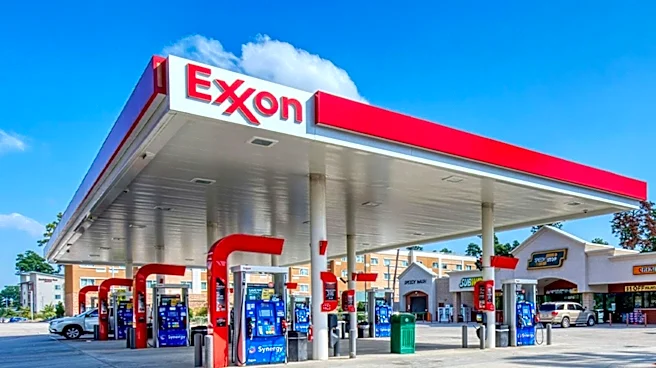
Exxon Mobil's shares fell more than 2% as part of a broader decline in the energy sector of the S&P 500. This downturn was influenced by a drop in West Texas Intermediate crude futures, which briefly fell to $69.63 a barrel. The decline in oil prices
comes as oil tankers continue to navigate the Strait of Hormuz, a critical passage for global oil shipments. Other energy companies, including APA Corp, Halliburton, and ConocoPhillips, also saw their shares decrease by over 3%. The travel industry, however, experienced gains as lower oil prices benefited companies like Expedia Group and Booking Holdings, which saw their shares rise by 9% and 8%, respectively.
Why It's Important?
The decline in Exxon Mobil's shares reflects broader market concerns about the energy sector's volatility, particularly in response to fluctuating oil prices. The energy sector's performance is crucial for the U.S. economy, as it impacts everything from consumer prices to industrial production costs. The current situation highlights the sensitivity of energy stocks to geopolitical events and market perceptions of supply and demand dynamics. For investors, the mixed signals from the energy market underscore the challenges of navigating an environment where short-term disruptions can significantly impact stock valuations.
What's Next?
As the situation in the Strait of Hormuz stabilizes, market attention may shift towards longer-term supply and demand trends. Analysts will likely focus on U.S. production levels and global economic indicators to assess future oil price movements. Companies in the energy sector may need to adjust their strategies to manage risks associated with geopolitical tensions and market volatility. Investors will be watching for any policy changes or economic developments that could influence oil prices and, by extension, the performance of energy stocks.