







What's Happening?
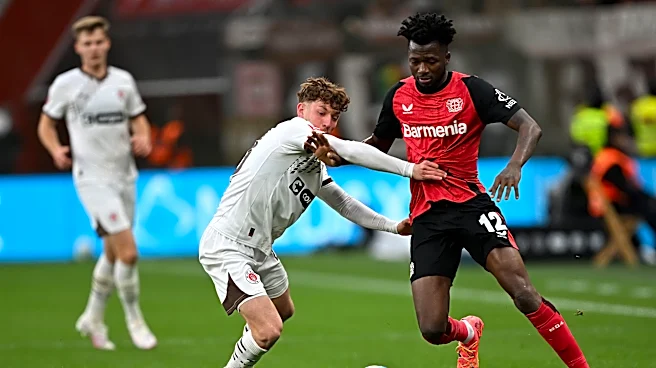
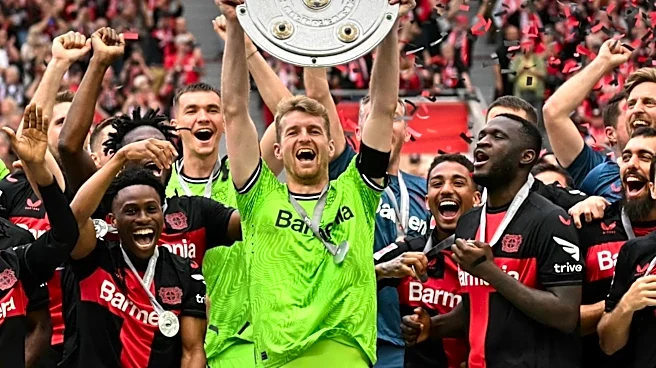
Bayer 04 Leverkusen, a German football club, has secured its first-ever Bundesliga championship title in the 2023-24 season. Known as 'Die Werkself' or 'Leverkusen,' the club originated in 1904 as a works team under the ownership of pharmaceutical company
Bayer AG. This victory marks a significant milestone for the club, which previously held the unfortunate nickname 'Neverkusen' due to its history of finishing as runners-up, most notably in 2002 across the Bundesliga, DFB-Pokal, and UEFA Champions League. Despite past near-misses, Leverkusen has a history of success, including winning the 1988 UEFA Cup and the 1993 DFB-Pokal. The club plays its home matches at the 30,210-capacity BayArena and is recognized for its strong family-friendly image alongside a passionate ultras culture. Supporters embrace their industrial heritage, with nicknames like 'Pillendreher' (Tablet Twisters) reflecting their pharmaceutical roots.
Why It's Important?
This championship is important for Bayer 04 Leverkusen as it redefines the club's legacy, shedding its 'Neverkusen' moniker and establishing it as a dominant force in German football. For the U.S. sports landscape, particularly for fans of international soccer, this achievement highlights the competitive nature and evolving dynamics of European leagues. The success of a club with corporate origins, like Bayer AG, also offers a case study in sports ownership and branding, which can be relevant to U.S. sports franchises and their corporate partnerships. The club's ability to cultivate a strong fan base and identity, despite its corporate ties, demonstrates successful community engagement strategies that could be observed by U.S. teams. Furthermore, the increased visibility of European football in the U.S. means that such historic wins contribute to the growing interest and viewership of international sports, potentially influencing media rights and fan engagement strategies in the U.S. market.
What's Next?
Following their historic Bundesliga championship, Bayer 04 Leverkusen will likely focus on maintaining their success in future seasons and competing in European competitions, such as the UEFA Champions League. The club's continued evolution under its leadership will be closely watched, with expectations for strong performances in both domestic and international tournaments. There will also be increased scrutiny on player transfers and club developments, as successful teams often face challenges in retaining key players and managing heightened expectations. The club's ability to build upon this championship will determine its long-term standing in German and European football. Additionally, the success may lead to increased commercial opportunities and global recognition, potentially expanding its fan base and market reach, including in the U.S.
Beyond the Headlines
The triumph of Bayer 04 Leverkusen extends beyond mere sporting achievement, offering insights into the cultural and economic aspects of football. The club's journey from a 'works team' to a national champion underscores the deep integration of sports with industrial and corporate identities in Germany, a model that differs from many U.S. sports franchises. The embrace of nicknames like 'Pillendreher' by fans, despite initial criticisms of being a 'plastic club,' highlights the complex relationship between corporate sponsorship, club identity, and fan loyalty. This success could also influence youth development programs and scouting networks, as the club's model for nurturing talent becomes a benchmark. Ethically, it raises questions about the balance between commercial interests and traditional club values, a debate that resonates in various sports leagues globally, including those in the U.S. The long-term impact could see a shift in how success is perceived and achieved within football, emphasizing strategic development over sheer financial power.