



What's Happening?
Robot vacuums are increasingly integrating with smart home technology, offering users advanced control and convenience in household cleaning. These devices, which autonomously navigate and clean floors, can now be managed through dedicated smartphone
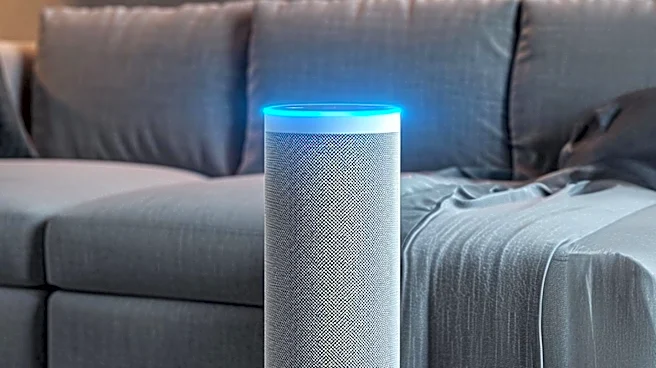
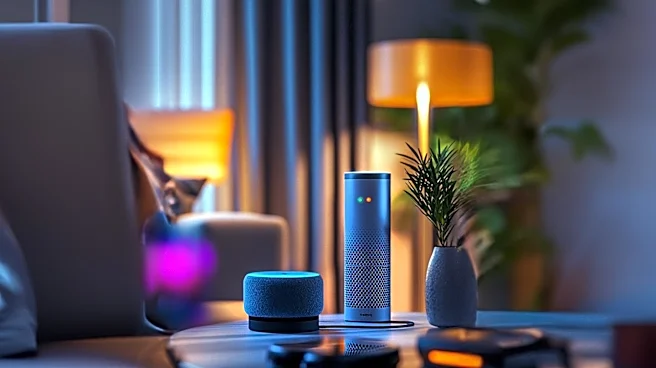
applications. These apps provide functionalities such as access to floor maps, cleaning schedules, battery information, and room-specific settings, allowing users to start or stop cleaning sessions remotely. Furthermore, some robot vacuums are compatible with voice-controlled assistants, enabling activation of certain functions via spoken commands. Advanced systems also feature virtual boundaries and restricted cleaning zones, preventing the appliance from entering specific areas. This technological evolution aims to reduce manual effort in maintaining clean homes, addressing issues like dust, pet hair, and everyday dirt accumulation on floors and carpets. The availability of these smart features varies by manufacturer and model, reflecting ongoing advancements in automated cleaning solutions.
Why It's Important?
The integration of robot vacuums with smart home technology signifies a notable shift in household maintenance, impacting consumer lifestyles and the smart home market. For consumers, this development offers enhanced convenience and efficiency, freeing up time previously spent on manual cleaning. The ability to control cleaning remotely or via voice commands makes home management more flexible, particularly for individuals with busy schedules or those seeking to optimize their living spaces. This trend also drives innovation within the smart home industry, pushing manufacturers to develop more sophisticated and interconnected devices. The increased adoption of such technologies contributes to the broader growth of the Internet of Things (IoT) ecosystem, where various household appliances communicate and operate seamlessly. This can lead to greater energy savings through optimized cleaning schedules and improved overall home security by maintaining a tidy environment without constant human intervention. The market for these integrated solutions is expected to expand, creating new opportunities for technology companies and retailers.
What's Next?
The future of robot vacuums and smart home integration is likely to see continued advancements in artificial intelligence and machine learning, leading to more intuitive and adaptive cleaning systems. We can anticipate improved navigation capabilities, better obstacle avoidance, and more personalized cleaning routines based on user habits and home layouts. Further integration with other smart home devices, such as air purifiers or security systems, could create a more holistic and automated home environment. Manufacturers will likely focus on enhancing battery life, suction power, and the ability to handle diverse floor types and debris. The development of more sophisticated self-emptying and self-maintaining features will also reduce the need for human intervention. As the technology becomes more widespread and affordable, it is expected to become a standard feature in modern homes, further solidifying the role of smart home technology in daily life.
Beyond the Headlines
Beyond the immediate convenience, the proliferation of smart robot vacuums raises deeper implications concerning data privacy and cybersecurity within the smart home ecosystem. These devices often map home layouts and collect data on usage patterns, which could potentially be vulnerable to breaches if not adequately secured. Ethical considerations around data ownership and how this information is used by manufacturers or third parties will become increasingly important. Furthermore, the growing reliance on automated systems could subtly alter human behavior and expectations regarding household chores, potentially leading to a decreased sense of personal responsibility for manual tasks. The environmental impact of manufacturing and disposing of these increasingly complex electronic devices also warrants consideration, as does the energy consumption of a fully automated home. As smart home technology becomes more pervasive, discussions around these ethical, legal, and environmental dimensions will become crucial for shaping responsible technological development and adoption.