






What's Happening?
Nvidia is under increased scrutiny regarding its China-related business practices, prompted by a report from short seller Muddy Waters. The report, titled “Nvidia: More China,” raises questions about potential connections between former Nvidia executive
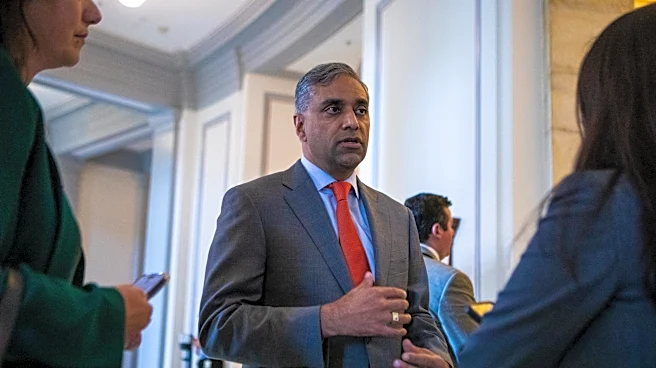
Ajay “Jay” Puri and Super Micro Computer (Supermicro), a California-based server manufacturer accused of illegally diverting products to China. Muddy Waters highlighted publicly available photographs showing Puri alongside a woman identified as Cenly Chen, referred to as Cenly Puri in some images. The report questioned if this was the same Cenly Chen who previously served as Supermicro’s chief growth officer. An October shareholder complaint against Supermicro alleged that Chen managed purchases and customer allocation of Nvidia graphics processing units (GPUs) and was aware of illicit sales to China. Supermicro has denied these claims, stating that Chen did not manage its relationship with Nvidia or decide GPU distribution. Puri, formerly Nvidia’s executive vice-president of worldwide field operations and the company's third highest-ranking executive, stepped down in June to become a senior adviser.
Why It's Important?
This development is significant for the U.S. technology sector and its relationship with international trade regulations, particularly concerning China. Allegations of illegal product diversion to China could lead to severe penalties for companies involved, impacting their market access and financial stability. For Nvidia, a leading U.S. chipmaker, any confirmed links to illicit activities could damage its reputation, stock performance, and future business operations, especially given ongoing U.S. efforts to control technology exports to China. The scrutiny from short sellers like Muddy Waters and Michael Burry indicates a growing concern among investors about Nvidia's transparency regarding its China exposure. If these allegations prove true, it could trigger broader investigations into supply chain integrity and compliance with export controls across the U.S. tech industry, potentially leading to stricter regulations and increased oversight for companies operating in sensitive international markets.
What's Next?
The U.S. Justice Department is already leading a criminal investigation into Megaspeed, a cloud computing company and Nvidia customer, over possible export-control violations. This broader investigation suggests that regulatory bodies are actively monitoring the flow of sensitive technology. Nvidia had placed Megaspeed on its “no sell” list in June 2025 after Commerce Department investigators requested sales records. While Muddy Waters stated it would cover a substantial majority of its Nvidia short positions, indicating a potential shift in its immediate trading strategy, the underlying concerns about Nvidia's China exposure and alleged executive ties are likely to persist. Further investigations by U.S. authorities into Supermicro and any potential links to Nvidia executives could lead to legal actions, fines, or changes in corporate governance. Nvidia's response to these allegations and its future disclosures regarding its international sales will be closely watched by investors and regulators.
Beyond the Headlines
The allegations against Nvidia and Supermicro highlight the complex and often opaque nature of global supply chains, particularly in high-tech industries with national security implications. The use of publicly available photographs and shareholder complaints by short sellers to uncover potential misconduct underscores the increasing role of independent research and public information in corporate accountability. This situation also brings to light the ethical considerations for executives with international ties, especially when those ties could be perceived as conflicting with corporate or national interests. The broader implication is a potential re-evaluation of how U.S. technology companies manage their international relationships and ensure compliance with export controls, particularly in geopolitical hotspots. This could lead to a more stringent vetting process for executives and partners, and a greater emphasis on transparency in reporting international revenue and customer allocations to mitigate risks of illicit trade and maintain investor confidence.