





What's Happening?
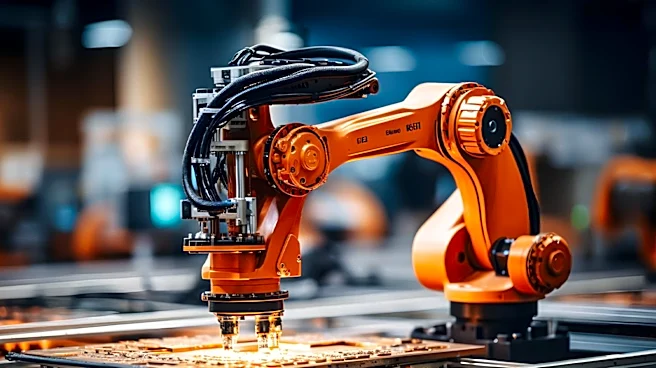
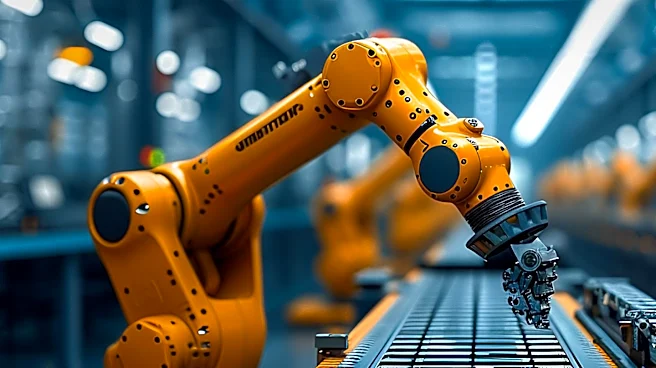
JBT Marel has launched new robotic systems, RoboOptimizer and ATHENA, designed to automate poultry deboning and trimming. RoboOptimizer, introduced in March 2024, evaluates chicken breast fillets and positions them for precise cutting into strips, cubes,
and fillets. ATHENA, set for release in January 2025, is an automated deboning system for chicken breasts capable of processing up to 6,000 breasts per hour with only two operators. This system utilizes adaptive processing technology to manage variations in breast size and position for subsequent processing. These innovations are part of a broader trend in the food robotics market, which includes applications in food cutting, produce grading, food decorating, industrial sanitation, and food handling and packaging. The adoption of such technologies aims to address labor shortages and the physical demands associated with processing poultry and red meats, while also optimizing yield through imaging technologies and automated cutting tools.
Why It's Important?
The introduction of advanced robotics in poultry processing by JBT Marel signifies a critical shift in how the U.S. food industry addresses persistent labor shortages and operational efficiency. By automating tasks like deboning and trimming, companies can reduce reliance on manual labor, which is often scarce and physically demanding. This can lead to more consistent product quality, reduced waste, and increased production speeds, directly impacting the profitability of poultry producers. The technology's ability to adapt to varying product sizes also ensures higher yield optimization, which is crucial for cost control in a competitive market. Furthermore, the reduced need for human contact in processing can enhance food safety and hygiene standards, benefiting consumers and reducing the risk of contamination. This trend is likely to influence investment decisions across the food processing sector, pushing other companies to adopt similar automation solutions to remain competitive.
What's Next?
The rollout of ATHENA in January 2025 will likely mark a significant milestone in the adoption of fully automated deboning systems within the poultry industry. Following its implementation, other major food processing equipment manufacturers may accelerate their own robotic development to compete with JBT Marel's offerings. We can anticipate increased investment in AI-driven vision systems and adaptive processing software to further refine robotic capabilities, allowing for even greater precision and efficiency. The success of these systems could also spur broader adoption of robotics in other meat processing sectors, such as red meat deboning, where similar labor challenges exist. Additionally, there may be a growing demand for skilled technicians capable of installing, maintaining, and programming these advanced robotic systems, creating new job opportunities in the automation and robotics fields within the agricultural sector.
Beyond the Headlines
The increasing integration of robotics in poultry farming extends beyond mere efficiency gains; it raises profound questions about the future of agricultural labor and the ethical implications of automation. While robotics can alleviate strenuous and repetitive tasks, it also displaces human workers, necessitating discussions about workforce retraining and economic transition programs. The reliance on advanced technology also introduces new vulnerabilities, such as cybersecurity risks to automated systems and the potential for technological failures to disrupt food supply chains. Furthermore, the precision and consistency offered by robots could lead to a more standardized product, potentially impacting traditional farming practices and consumer preferences for artisanal or less uniformly processed goods. The long-term societal impact will depend on how effectively the industry and policymakers manage these transitions, ensuring that technological progress benefits all stakeholders.