




What's Happening?
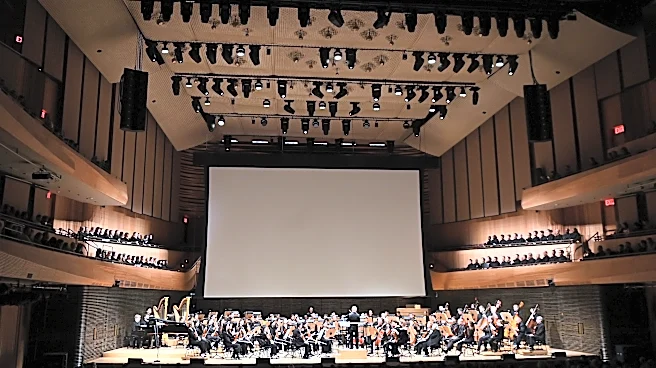
Orchestra Noir, an all-Black Atlanta-based orchestra founded in 2016 by music director Jason Ikeem Rodgers, is currently on its 20-city 'The Culture 2000s' tour. The orchestra performs classic hits from jazz, blues, and R&B genres, aiming to make classical
music accessible and engaging for diverse audiences. The D.C. show at the Warner Theater is part of this tour, which has also visited cities like Jacksonville and Philadelphia. The ensemble, which has grown to 23 musicians and a four-person leadership staff, incorporates elaborate stage productions, including full display screens, fog machines, lighting, and choreography. Musicians like saxophonist Taj Davis and violinist Nicole Wright emphasize the physical and mental preparation required for their dynamic performances, which often involve playing instruments while performing choreographed movements.
Why It's Important?
Orchestra Noir's innovative approach is significant for the U.S. music industry and cultural landscape. By blending classical orchestration with popular genres like hip-hop and R&B, they are breaking down traditional barriers and attracting new, multigenerational audiences to orchestral music. This initiative challenges the often-perceived elitism of classical music, making it more inclusive and reflective of diverse cultural experiences. The orchestra's success demonstrates a viable model for cultural institutions to engage broader demographics, potentially inspiring other ensembles to diversify their repertoire and presentation styles. Furthermore, as an all-Black orchestra, their visibility and success are crucial for representation, showing younger generations that Black individuals can excel and lead in classical music, thereby fostering greater diversity within the arts.
What's Next?
The continued success of Orchestra Noir's 'The Culture 2000s' tour and its unique performance style could lead to broader adoption of similar innovative programming by other orchestras and cultural organizations across the U.S. This might include more collaborations between classical musicians and artists from popular genres, as well as increased investment in theatrical and visual elements in live performances. The orchestra's growing fan base and critical acclaim could also open doors for larger venues, international tours, and educational initiatives aimed at nurturing young talent from underrepresented communities. Their model could influence funding priorities for arts organizations, encouraging support for projects that prioritize cultural relevance and audience engagement.
Beyond the Headlines
Beyond its immediate impact on the music scene, Orchestra Noir's work addresses deeper societal issues related to cultural access and representation. By bringing classical music to communities that might not traditionally engage with it, and by performing music that resonates with their cultural heritage, the orchestra is fostering a sense of belonging and ownership within the arts. This movement challenges historical narratives that have often marginalized Black artists and audiences in classical music. The emotional responses from audience members, as described by Taj Davis, highlight the profound impact of seeing oneself reflected and celebrated in artistic spaces. This contributes to a more equitable and vibrant cultural ecosystem, where art serves as a powerful tool for connection, inspiration, and social change.