




What's Happening?
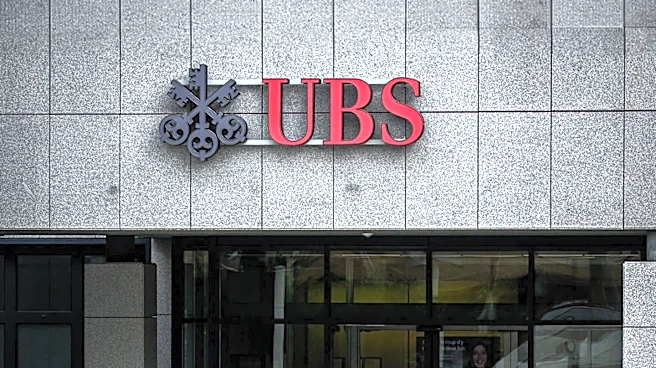
UBS Group AG is set to unveil its comprehensive post-Credit Suisse integration strategy in February. This announcement will include crucial details regarding its capital ratio target, return ambitions, and how the bank plans to balance investments in growth
with shareholder distributions, such as buybacks. According to CFO Todd Tuckner, UBS does not intend to maintain its Common Equity Tier 1 (CET1) capital ratio in the high 14% range going forward. The bank also anticipates updating its previously stated ambition of an approximately 18% return-on-CET1 for 2028. Tuckner indicated that UBS will explain how proposed Swiss capital and other regulatory requirements could impact its returns and overall competitiveness. By the third quarter, UBS had achieved $13.2 billion in gross integration savings, with expectations to exceed $13.5 billion by year-end. The bank is targeting an underlying cost-to-income ratio below 70% as the integration concludes, while simultaneously accelerating investments in wealth management, technology, resilience, and artificial intelligence.
Why It's Important?
This strategic update from UBS is highly significant for the global financial sector, particularly given the scale of the Credit Suisse acquisition and its implications for banking stability and competition. The clarification of UBS's capital ratio targets and capital allocation strategy will provide much-needed transparency to investors and regulators, influencing market perceptions of the bank's financial health and future growth prospects. The bank's commitment to exceeding $13.5 billion in integration savings underscores a successful, albeit complex, merger process, which could serve as a benchmark for future large-scale financial integrations. Furthermore, UBS's accelerated investment in wealth management, technology, and artificial intelligence highlights a broader industry trend towards digital transformation and enhanced client services. This focus on innovation, especially in AI to support financial advisors, could redefine how wealth management services are delivered, potentially increasing efficiency and broadening access to financial advice for high-net-worth clients.
What's Next?
In February, UBS will provide more specific details on its intended CET1 capital ratio and the trade-off between growth investments and buybacks. The bank will also update its return-on-CET1 ambition for 2028 and elaborate on the potential effects of new Swiss regulatory requirements on its returns and competitiveness. While new participation capital rules are expected to be phased in over several years, starting around 2028 or 2029, UBS will continue to assess their combined costs and influence. In U.S. wealth management, UBS plans to roll out new products and services under its banking charter beginning in 2027, aiming to expand deposit and service capabilities for clients, including small businesses. The bank is also actively considering acquisitions to accelerate its expansion in this sector. UBS will report its exit rate for the integration with its next quarterly results, providing further insight into its cost-to-income ratio.
Beyond the Headlines
The strategic decisions UBS outlines in February will have profound implications beyond immediate financial metrics. The bank's approach to balancing regulatory compliance with growth ambitions, particularly in the context of new Swiss capital requirements, could set a precedent for how large international financial institutions operate within stringent regulatory frameworks. The emphasis on AI and digital investments in wealth management suggests a long-term shift in the financial advisory landscape, where technology is increasingly seen as a tool to augment human expertise rather than replace it. This could lead to a more democratized access to sophisticated financial advice, potentially reshaping client expectations and competitive dynamics within the wealth management industry. Moreover, UBS's successful integration of Credit Suisse, marked by significant cost savings, demonstrates the potential for consolidation to create stronger, more efficient financial entities, while also raising questions about market concentration and systemic risk.