





What's Happening?
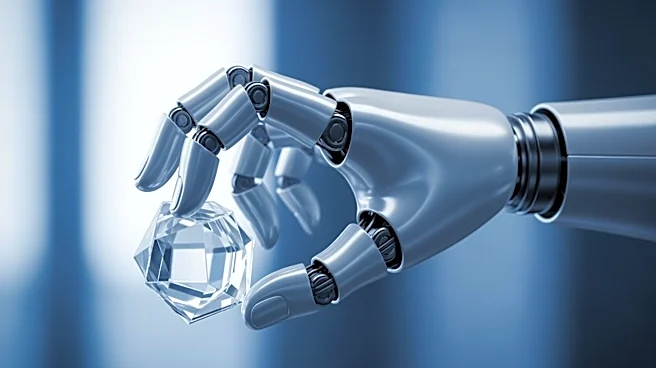
Sharpa, a Singapore-based robotics startup, is making significant strides in the field of humanoid robotics by focusing on dexterous manipulation. The company is developing advanced robotic hands and tactile sensing systems to enable robots to interact
more effectively with the physical world. Sharpa's approach emphasizes the importance of hands over legs in creating useful humanoid robots, arguing that the ability to manipulate objects is crucial for practical applications. The company has showcased its technology through live demonstrations, including collaborations with Nvidia and Unitree Robotics. These efforts highlight the potential of dexterous robots in various industries, from manufacturing to domestic assistance.
Why It's Important?
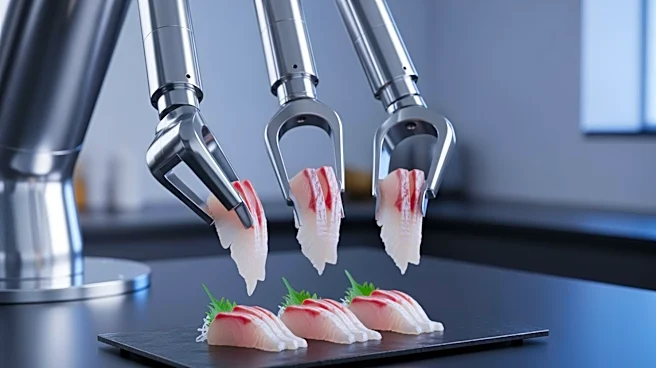
The development of dexterous humanoid robots has the potential to revolutionize multiple industries by automating tasks that require fine motor skills and adaptability. Sharpa's focus on tactile intelligence and dexterous manipulation addresses a critical challenge in robotics, paving the way for robots that can perform complex tasks in dynamic environments. This advancement could lead to increased efficiency and productivity in sectors such as manufacturing, logistics, and healthcare. Additionally, the ability of robots to handle delicate and varied objects could open new opportunities for automation in areas previously considered too complex for machines.
What's Next?
As Sharpa continues to refine its technology, the company is likely to expand its collaborations and explore new applications for its dexterous robots. The focus on tactile intelligence and multi-modality in robotics could lead to further breakthroughs in AI and machine learning, enhancing the capabilities of robots in real-world scenarios. The success of Sharpa's technology may also inspire other companies to invest in similar research, accelerating the development of humanoid robots. In the long term, the widespread adoption of dexterous robots could transform industries and redefine the role of automation in society.