






What's Happening?
South Korean defense companies, including Hanwha Aerospace, LIG D&A, Hyundai Rotem, and Korea Aerospace, have experienced a significant market value decline. Their combined market value plummeted from a 52-week peak of 170 trillion won to approximately
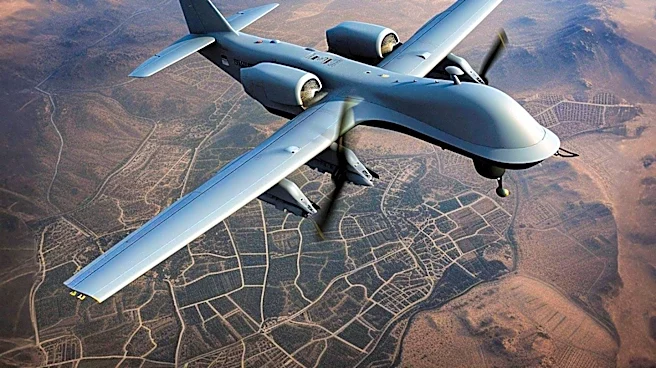
62 trillion won by the end of October. This downturn follows a period of robust growth driven by increased global military spending after Russia's invasion of Ukraine, which saw South Korean firms gain market share due to competitive pricing and quick delivery of conventional weapons like tanks and artillery. However, the modern battlefield, as demonstrated in Ukraine and by Iranian drone strikes, is increasingly characterized by drones and counter-drone systems, raising questions about the long-term relevance of traditional weaponry. Analysts like Peter Kim of KB Securities note that while South Korean firms are strong in conventional arms, the drone market is largely dominated by China. The sell-off is also attributed to disappointing earnings, a stronger won, and delays in export orders, with governments being slower than anticipated to convert defense spending pledges into actual budgets and orders.
Why It's Important?
The shift in the global defense market has significant implications for South Korea's economy, which has heavily invested in its defense industry as a key export sector. The decline in stock values reflects investor concerns about the industry's adaptability to evolving warfare technologies, particularly the rise of drones and AI. While conventional weapons remain essential for capturing and holding terrain, the increasing emphasis on advanced technologies like AI and drone systems in military procurement could challenge South Korean firms if they do not rapidly innovate. The situation also highlights broader trends in global defense spending, where countries are re-evaluating their procurement priorities based on lessons learned from recent conflicts. This could lead to a reallocation of defense budgets towards more technologically advanced, albeit potentially more expensive, systems, impacting the competitive landscape for defense manufacturers worldwide.
What's Next?
South Korean defense companies are actively investing in drones and unmanned systems, indicating a strategic pivot towards modern warfare technologies. While meaningful exports in these new areas may take time to materialize due to the need for proven operational track records, experts anticipate more tangible results in the near future. Despite the current downturn, analysts remain positive about the sector's long-term growth outlook, citing continued demand for conventional platforms due to ongoing supply constraints and the importance of deterrence. Recent deals, such as K9 howitzer orders to Spain and K239 rocket system orders from Norway, along with LIG D&A's K-SAAM naval missile system export to Malaysia, suggest that conventional weapons still hold a significant place in global defense strategies. The industry will likely focus on balancing continued production of traditional arms with accelerated development and integration of advanced technologies to meet evolving global defense needs.
Beyond the Headlines
The challenges faced by South Korean defense firms underscore a broader strategic dilemma for nations reliant on traditional military industrial complexes. The rapid evolution of warfare, driven by technological advancements, necessitates a fundamental re-evaluation of defense investment priorities. This shift could lead to increased international collaboration in developing cutting-edge defense technologies, as no single nation may possess all the necessary expertise. Furthermore, the economic implications extend beyond the defense sector itself, influencing national R&D spending, job creation in high-tech industries, and geopolitical alliances. The ability of countries like South Korea to adapt will not only determine their economic competitiveness but also their strategic relevance in a rapidly changing global security landscape, potentially fostering a new arms race in AI and drone capabilities.