

What's Happening?
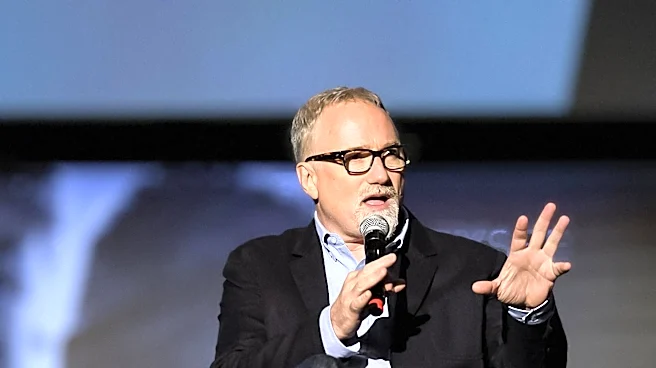
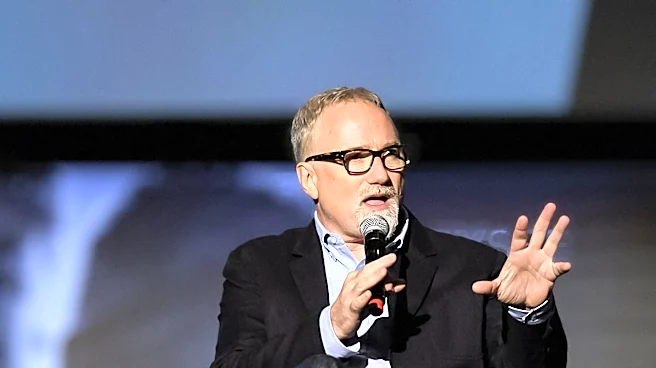
Director David Fincher has detailed his perspective on integrating artificial intelligence into the filmmaking process, aiming to streamline production and reduce the number of takes required for scenes. Speaking on 'The Big Picture' podcast to promote
his latest film, 'The Further Mis-Adventures of Cliff Booth,' Fincher explained that AI could handle repetitive technical aspects such as maintaining focus, executing dolly shots, and preventing minor visual obstructions like hair crossing an actor's eye. His vision involves shooting master scenes with traditional crews and sets, then using AI to generate subsequent iterations like over-the-shoulder shots and close-ups from actors performing 'from the clavicles up' in chairs. This method would allow crews to move to the next stage of production while actors complete their performances for AI processing. Fincher, known for demanding numerous takes, believes AI could reduce this to around 15 takes per scene, making the process more efficient while still relying on human performances.
Why It's Important?
Fincher's embrace of AI in filmmaking signals a potential shift in Hollywood production methodologies, offering a glimpse into a future where technology significantly alters traditional roles and timelines. His comments are particularly noteworthy given ongoing industry debates and concerns about AI's impact on creative jobs and artistic integrity. If widely adopted, Fincher's proposed AI integration could lead to faster production schedules and potentially lower costs, benefiting studios and producers. However, it also raises questions for actors and crew members, as the nature of their work might change, with some tasks becoming automated or requiring different skill sets. The director's stance contrasts with other prominent filmmakers like Guillermo del Toro and Christopher Nolan, who have expressed skepticism or outright rejection of AI in creative processes, highlighting a growing divide within the industry regarding technological adoption.
What's Next?
The discussion around AI in filmmaking is expected to intensify, especially as more films like Fincher's 'The Further Mis-Adventures of Cliff Booth' begin to incorporate and showcase AI technologies. The industry will likely observe the reception and commercial success of such projects to gauge the viability and acceptance of AI-driven production methods. Further technological advancements in AI will continue to push the boundaries of what's possible, potentially leading to more sophisticated tools that can handle complex visual and performance elements. Stakeholders, including unions representing actors and crew, will likely engage in ongoing dialogues and negotiations to establish guidelines and protections concerning AI's role in film production, aiming to balance innovation with job security and creative control. The debate will also likely influence film school curricula and training programs, adapting to new skill requirements for future filmmakers.
Beyond the Headlines
Fincher's vision touches upon deeper implications regarding the definition of authorship and the human element in art. While he insists that AI-generated iterations would still be 'based on real human beings' and their movements, the increasing reliance on technology to craft visual narratives could subtly alter the creative process and the final artistic product. This raises ethical questions about the authenticity of performances and the extent to which AI can replicate or enhance human emotion and nuance without diminishing its original impact. Furthermore, the potential for AI to reduce the number of takes might impact the collaborative dynamic on set, where repeated takes often lead to organic discoveries and refinements in performance. The long-term cultural shift could see audiences becoming accustomed to a new aesthetic influenced by AI's capabilities, potentially redefining what constitutes 'realistic' or 'cinematic' in the coming decades.