
What's Happening?
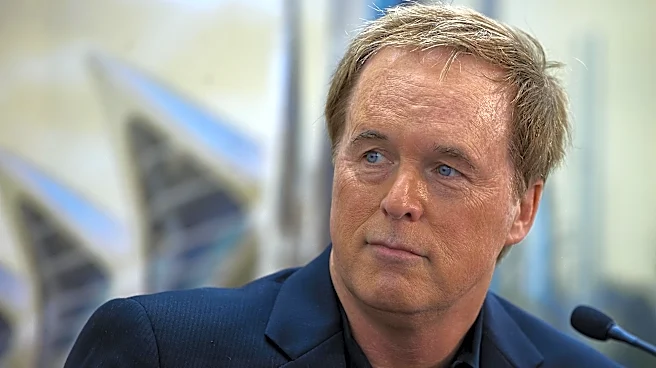
Brad Bird, the acclaimed director known for family-friendly animated features such as 'The Iron Giant,' 'The Incredibles,' 'Ratatouille,' and 'The Incredibles 2,' has expressed his willingness to direct an R-rated
animated film. This revelation came during a press junket for his upcoming Netflix film, 'Ray Gunn,' which blends film noir and futuristic sci-fi elements. Bird stated that his primary condition for taking on such a project would be that it must be 'story driven.' He believes that animation should not be confined to specific ratings like G or PG, comparing it to live-action films like 'The Godfather,' which is R-rated but he wouldn't alter. Bird emphasized that while he doesn't currently have an R-rated story idea, he is open to exploring all types of filmmaking.
Why It's Important?
This stance from a prominent director like Brad Bird challenges conventional perceptions of animation in the U.S. film industry, which often pigeonholes the medium as exclusively for children or family audiences. His openness to R-rated animated content could pave the way for more diverse and mature animated storytelling, potentially expanding the audience demographic for animated films beyond traditional boundaries. This shift could encourage other filmmakers and studios to invest in animated projects with more complex themes and narratives, leading to a broader range of cinematic offerings. It also highlights a growing recognition that animation is a versatile artistic medium capable of addressing any subject matter, rather than being defined by its target age group.
What's Next?
While Brad Bird has not announced any immediate plans for an R-rated animated film, his public statement could spark discussions within the animation industry regarding the potential for more adult-oriented animated features. This might encourage screenwriters and animators to develop concepts that align with Bird's vision, potentially leading to future collaborations. The success of his upcoming Netflix film, 'Ray Gunn,' which already features more mature themes, could also influence the industry's willingness to support animation that deviates from typical family-friendly fare. The conversation around animation's rating potential is likely to continue, with Bird's comments serving as a significant contribution to the debate.
Beyond the Headlines
Bird's perspective on animation's potential extends beyond mere ratings; it touches upon the artistic freedom and narrative depth that the medium can achieve. By advocating for story-driven R-rated animation, he is implicitly arguing for animation to be recognized as a legitimate art form capable of tackling profound and challenging subjects, much like live-action cinema. This could lead to a re-evaluation of animation's cultural status in the U.S., moving it further away from being solely a children's entertainment category. Such a shift could foster greater creative experimentation and push the boundaries of what animated films can explore, potentially attracting a new generation of filmmakers and audiences to the medium.