





What's Happening?
The WNBA has announced its most-watched first round in history, averaging 1.3 million viewers across 10 games on ESPN, Prime Video, and USA Network. This marks a significant increase of 37% from the previous year's 944,000 viewers and 17% from the 2024
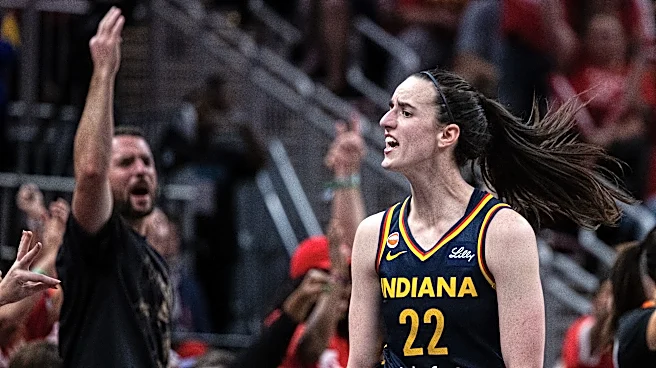
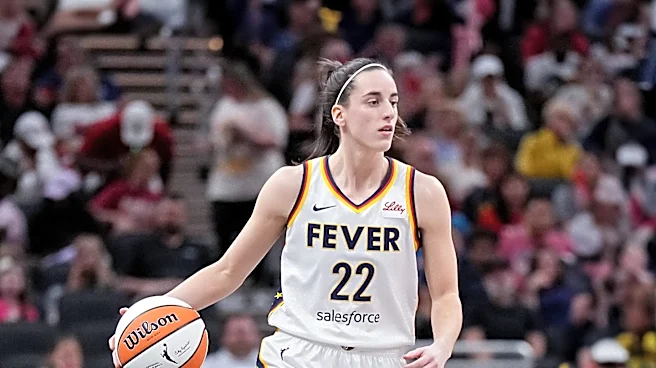
record of 1.1 million. The record viewership was largely driven by games featuring Caitlin Clark's Indiana Fever, whose three first-round games averaged approximately 1.93 million viewers, nearly double the 985,000 average for the other seven first-round games. The Fever's lowest-rated playoff game, with 1.42 million viewers, still outdrew the best non-Fever game, which garnered 1.40 million viewers. Following this announcement, Yahoo Sports posted a graphic celebrating the viewership milestone, but it notably excluded Clark or any Fever player, featuring instead A'Ja Wilson, Breanna Stewart, Gabby Williams, and Angel Reese. This omission sparked outrage among fans and analysts who argued that Clark was instrumental in achieving the record ratings.
Why It's Important?
The record-breaking viewership for the WNBA's first round signifies a substantial growth in the league's popularity and market reach, particularly in the U.S. sports landscape. The data clearly indicates that Caitlin Clark's presence has a profound 'Caitlin Clark Effect,' drawing in millions of new viewers and significantly boosting ratings. This surge in viewership translates to increased advertising revenue, greater media attention, and potentially more lucrative broadcast deals for the league, benefiting all teams and players. However, the controversy surrounding Yahoo Sports' graphic highlights a tension within the league and its media partners regarding how to acknowledge and promote individual stars, especially those who are driving unprecedented growth, versus focusing on teams that advance further in the playoffs. This debate could influence future marketing strategies and player recognition efforts, impacting how the WNBA leverages its newfound popularity to sustain long-term growth and appeal to a broader audience. The dip in second-round ratings after the Fever's elimination further underscores Clark's significant impact on viewership.
What's Next?
The WNBA and its media partners will likely continue to navigate the balance between celebrating team success and recognizing individual player contributions, especially given the clear impact of players like Caitlin Clark on viewership. Future promotional materials and media coverage will be scrutinized for their inclusivity and accuracy in reflecting the drivers of the league's success. The league may explore new strategies to capitalize on the 'Caitlin Clark Effect' while also promoting other star players and teams to ensure diversified growth. As the semifinals progress, the WNBA will be monitoring viewership trends to understand if the momentum generated in the first round can be sustained. The ongoing discussion among fans and analysts regarding player recognition could also influence how the league approaches its public relations and marketing campaigns in the upcoming seasons, aiming to maintain and expand its growing fanbase.
Beyond the Headlines
The controversy surrounding Caitlin Clark's exclusion from the Yahoo Sports graphic touches upon deeper issues within professional sports, particularly concerning the recognition of individual athletes who transcend the sport and bring in new audiences. It highlights a potential disconnect between traditional sports media narratives, which often prioritize playoff success, and the broader cultural impact of certain players. This situation could prompt a re-evaluation of how sports leagues and media outlets measure and celebrate success, considering both on-court achievements and off-court influence on viewership and engagement. The 'Caitlin Clark Effect' demonstrates the power of individual star appeal to elevate an entire league, suggesting that future growth strategies might need to be more agile in recognizing and leveraging such phenomena. This incident also reflects broader societal discussions about representation and the acknowledgment of contributions, even when they don't perfectly align with conventional metrics of success.