
What's Happening?
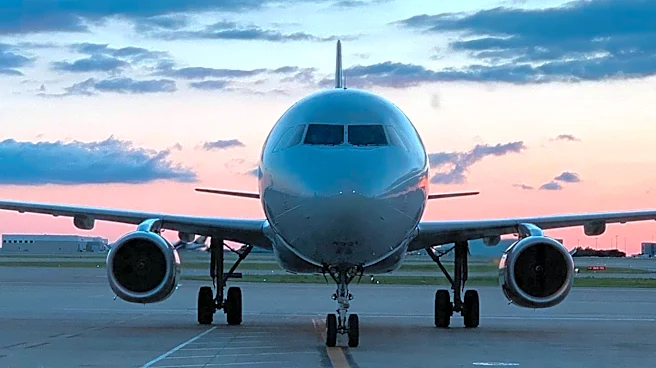
Qantas has successfully conducted a test flight of the Airbus A350-1000ULR, marking a significant step in its Project Sunrise initiative. The aircraft completed a nonstop journey from Toulouse, France,
to Melbourne, Australia, covering nearly 17,000 kilometers in 19 hours. This test flight is part of a certification campaign for the ultra-long-range aircraft, which is designed to operate nonstop flights between Sydney and London. The A350-1000ULR features a specially-designed 20,000-litre fuel tank, enabling it to fly up to 22 hours nonstop. Qantas plans to launch commercial routes using this aircraft in October 2027, although previous delays have pushed back the start date. The test flight attracted significant attention, with over 67,000 people tracking its progress online.
Why It's Important?
The successful test flight of the Airbus A350-1000ULR is crucial for Qantas's Project Sunrise, which aims to offer nonstop flights between Australia and major international destinations like London and New York City. This initiative could redefine long-haul travel by reducing travel time and increasing convenience for passengers. The ability to fly nonstop for up to 22 hours could position Qantas as a leader in ultra-long-haul flights, potentially increasing its market share and competitiveness in the global airline industry. The project also highlights advancements in aviation technology, particularly in fuel efficiency and aircraft design, which could have broader implications for the industry.
What's Next?
Following the test flight, Qantas will continue its certification campaign for the A350-1000ULR, with further tests planned to ensure the aircraft meets all operational requirements. The airline is expected to receive its first A350-1000ULR in April 2027, with commercial services slated to begin shortly thereafter. Qantas will likely adjust its planned routes based on customer demand, potentially expanding its hubs beyond Sydney to include Melbourne and Brisbane. The success of Project Sunrise could prompt other airlines to explore similar ultra-long-haul routes, leading to increased competition and innovation in the industry.