









What's Happening?
Ford Motor Company has hired 350 experienced engineers, referred to as 'gray beards,' to mentor younger workers and improve the effectiveness of artificial intelligence (AI) tools. This initiative aims to leverage the extensive experience of these veteran
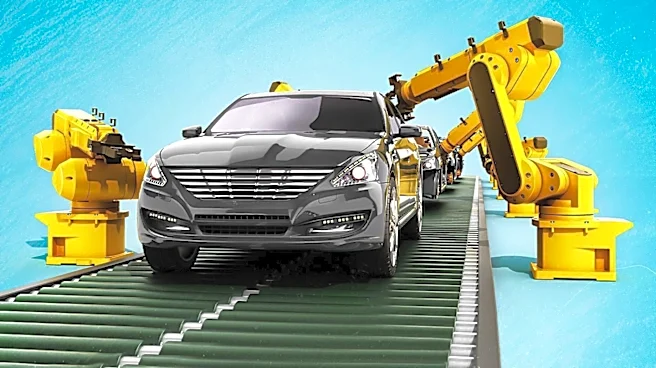
engineers to enhance AI-driven productivity and quality control in manufacturing processes. The company has recognized the limitations of AI, emphasizing that it is only as effective as the data and human expertise that guide it. Ford's approach involves using AI vision systems to perform quality checks on assembly lines, which has contributed to a significant improvement in the company's quality rankings. Ford's CEO, Jim Farley, highlighted the importance of human workers in achieving these gains, noting that AI tools are most effective when combined with human attention to detail.
Why It's Important?
This development underscores the critical role of human expertise in maximizing the benefits of AI in industrial settings. By integrating experienced engineers with AI systems, Ford aims to reduce costly recalls and improve product quality, which has significant financial implications. The company's strategy reflects a broader industry trend where human oversight is essential to harness AI's potential effectively. This approach not only enhances operational efficiency but also addresses concerns about job displacement due to automation. Ford's success in improving quality rankings demonstrates the value of combining human and AI capabilities, setting a precedent for other companies navigating the challenges of AI integration.
What's Next?
Ford plans to continue its focus on quality improvement and cost reduction by further integrating AI with human expertise. The company expects to see a decrease in recall-related expenses and aims to save $1 billion in costs this year. As Ford and other automakers blend automation with human labor, there may be ongoing discussions with labor unions about the impact of AI on jobs and the distribution of financial gains from increased productivity. Ford's strategy may influence industry standards and policies related to AI deployment and workforce development.
Beyond the Headlines
The integration of AI and human expertise at Ford highlights broader ethical and economic considerations in the automotive industry. As companies adopt AI technologies, there is a need to balance automation with job preservation and fair distribution of productivity gains. This development raises questions about the future of work and the role of human labor in an increasingly automated world. Ford's approach may serve as a model for other industries seeking to navigate the complexities of AI adoption while maintaining a skilled workforce.