



What's Happening?
Paris Saint-Germain (PSG) has decided not to pursue a new left winger in the upcoming January transfer window, despite star player Khvicha Kvaratskhelia suffering a severe anterior cruciate ligament (ACL) injury in his right knee on October 20. The injury,
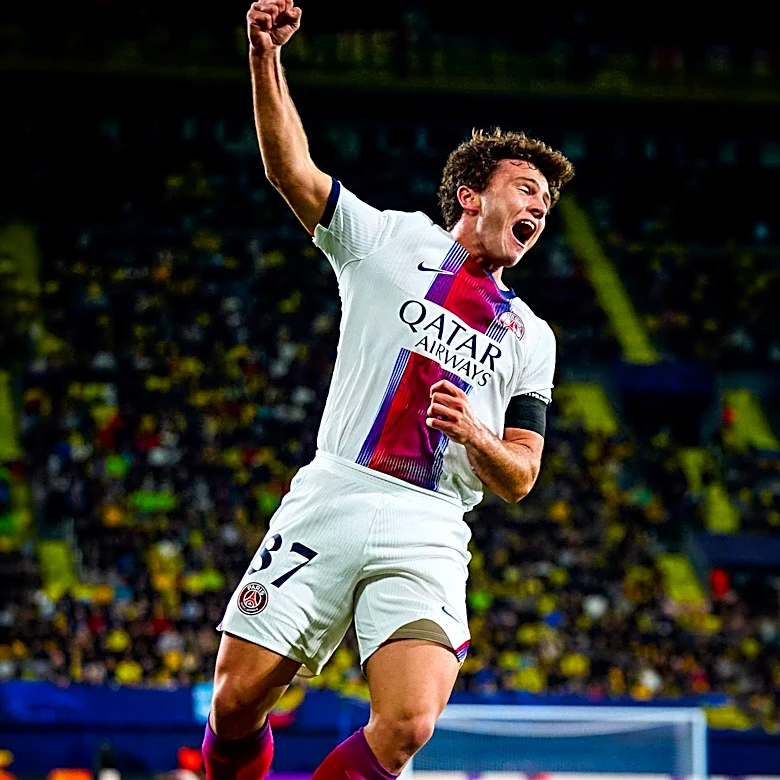
sustained during a 4-2 victory over Barcelona, is expected to sideline Kvaratskhelia for the remainder of the season. This decision comes after weeks of internal deliberation within the club, which considered options such as moving Desire Doue to the left wing, relying on summer signing Mika Godts, or entering the transfer market. According to Canal+ journalist Olivier Tallaron, PSG will only consider signing a replacement if another key attacking player sustains a significant injury. The club's management and coaching staff, led by Luis Enrique, reportedly remain confident in their current squad's depth and versatility, even with other players like Ousmane Dembele also in the treatment room. PSG has maintained strong form, securing 10 consecutive wins across all competitions, including a dominant 6-0 victory over Villarreal in the Champions League.
Why It's Important?
PSG's decision highlights a strategic shift towards trusting existing squad depth and youth development rather than immediate market solutions, even in the face of a major injury to a key player. This approach could provide significant opportunities for younger talents like Mika Godts and Maghnes Akliouche to gain valuable playing time and integrate more deeply into Luis Enrique's tactical system. For these emerging players, Kvaratskhelia's absence becomes a pathway to accelerate their development and prove their worth at the highest level of European football. Conversely, this strategy carries inherent risks; should PSG face further injuries or a dip in form, the lack of an external reinforcement could expose vulnerabilities in their attacking options. The club's continued success despite these absences suggests a robust team dynamic and tactical flexibility, potentially setting a precedent for how elite clubs manage player injuries without resorting to immediate, costly transfer market interventions. This could influence future transfer policies across top European leagues, emphasizing internal solutions over external ones.
What's Next?
In the immediate future, PSG will continue to rely on its current attacking lineup, with players like Desire Doue, Mika Godts, and Maghnes Akliouche expected to fill the void left by Khvicha Kvaratskhelia. The club's performance in the coming months, particularly in critical Champions League fixtures and domestic league matches, will be a crucial test of this strategy. Increased playing time for younger players will allow Luis Enrique to further assess their capabilities and determine their long-term roles within the squad. Should PSG maintain its high level of performance, it will validate the club's decision to trust its internal resources. However, any significant drop in form or additional injuries could prompt a re-evaluation of their transfer policy ahead of future windows. The development of these young players will be closely watched, as their ability to consistently perform at an elite level will be key to PSG's ambitions for the remainder of the season and beyond.
Beyond the Headlines
PSG's choice to forgo a January signing despite Kvaratskhelia's injury reflects a broader trend in modern football management: the increasing emphasis on squad depth, tactical versatility, and the integration of academy or recent youth signings. This approach moves beyond simply replacing injured stars with equally expensive alternatives, instead fostering a culture where multiple players can adapt to different roles and systems. Ethically, it prioritizes player development and loyalty to existing squad members, potentially boosting team morale and cohesion. Legally and financially, it avoids the often inflated prices and complexities of the mid-season transfer market, allowing the club to maintain financial stability and strategic planning. This decision could also signal a long-term shift in PSG's recruitment philosophy, moving towards building a more sustainable and adaptable squad rather than relying solely on marquee signings. The success or failure of this strategy will offer valuable insights into the efficacy of internal solutions versus external market interventions in elite football.