




What's Happening?
Rheinmetall AG, a Düsseldorf-based security and defense industry group, has announced a new partnership with the German Bobsleigh, Luge and Skeleton Federation (BSD). This collaboration, set to begin on October 1, 2026, will position Rheinmetall as the premium
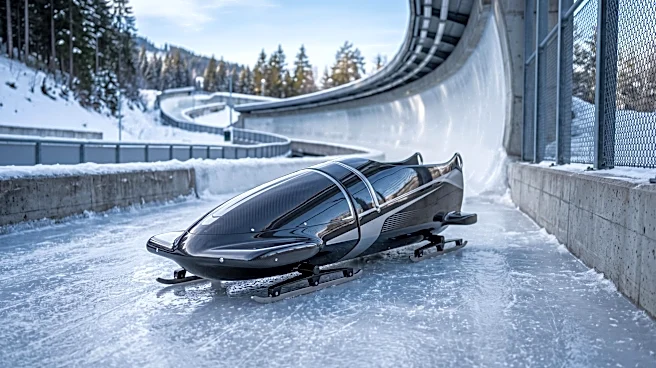
and technology partner for the BSD's bobsleigh, luge, and skeleton disciplines. The partnership is slated to continue through the end of the 2030 Winter Olympics in France. Rheinmetall's presence will be prominently displayed at international World Cup competitions, with its logo visible on the helmets of German bobsleigh athletes and on the sleighs of luge and skeleton athletes. Armin Papperger, CEO of Rheinmetall AG, emphasized the shared commitment to excellence and technological innovation between the company and world-class winter sports. Thomas Schwab, Executive Director of the BSD, highlighted Rheinmetall as an internationally renowned partner embodying innovation, precision, and high performance, values central to their sport. The partnership also underscores the strong ties between German bobsleighing and government institutions, as many German athletes are employed by the German Armed Forces, Federal Police, or state police forces.
Why It's Important?
This partnership signifies a notable intersection of corporate sponsorship and elite sports, particularly within a sector not typically associated with defense industries. For Rheinmetall, this move offers significant brand visibility on an international stage, associating its name with high performance, precision, and technological excellence—qualities it aims to project for its core business. The consistent visibility on athletes' helmets and equipment during World Cup, European, and World Championship events, as well as the 2030 Winter Olympics, provides a unique marketing platform. For the BSD, the partnership with a major industrial player like Rheinmetall provides crucial financial stability and planning certainty for the coming seasons, extending through the 2030 Winter Olympics. This support is vital for maintaining Germany's dominant position in international ice track sports, which relies heavily on funding for training, equipment, and athlete development. The emphasis on the close ties between athletes and government institutions, such as the Bundeswehr and police forces, also highlights a unique aspect of German sports funding and athlete support.
What's Next?
The partnership between Rheinmetall and the German Bobsleigh, Luge and Skeleton Federation is scheduled to officially commence on October 1, 2026, and will run until the conclusion of the 2030 Winter Olympics in France. In the interim, both parties plan to develop joint activities beyond simple helmet branding. These future initiatives are expected to include athlete appearances, employee and fan engagement programs, and collaborative communication formats. These efforts will focus on key events such as World Cup and World Championship highlights, as well as the entire Olympic cycle leading up to 2030. The consistent visibility of Rheinmetall's branding on athletes' equipment will become a regular feature of international competitions, reinforcing the company's association with the sport. The long-term nature of this agreement provides the BSD with a stable financial foundation, enabling continued investment in athlete development and technological advancements in bobsleigh, luge, and skeleton sports.
Beyond the Headlines
This partnership extends beyond a typical sports sponsorship, revealing deeper implications regarding the funding and public image of sports federations, particularly those with strong ties to government institutions. The explicit mention that a majority of German athletes are employed by the German Armed Forces, Federal Police, or state police forces highlights a unique model of athlete support that combines elite sports with career opportunities. This integration suggests a symbiotic relationship where government institutions foster athletic talent, and in return, athletes potentially serve as public figures representing national pride and discipline. Rheinmetall's involvement, a company in the security and defense sector, could also subtly influence public perception by associating its brand with national achievement and the dedication of these athletes. This strategic alignment could serve to normalize or enhance the public image of defense industries through the positive lens of sports, while also providing a stable, long-term funding model for a highly successful national sports program.