



What's Happening?
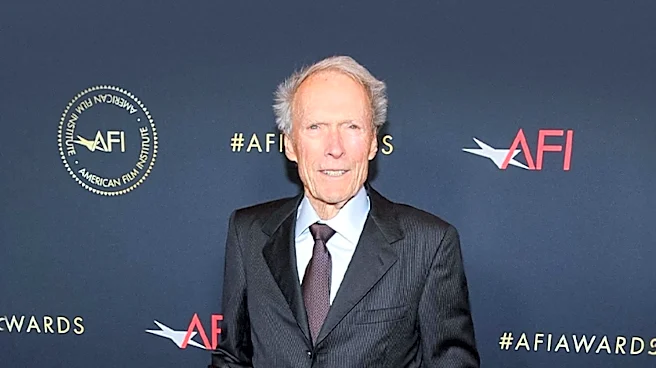
Veteran actor and director Clint Eastwood expressed strong disapproval of the 2005 film 'The Dukes of Hazzard,' viewing it as a prime example of a concerning trend in modern cinema. In December 2004, prior to the film's release, Eastwood voiced his apprehension
about the industry's trajectory, specifically citing the prevalence of remakes. He questioned the future of filmmaking if such trends continued. 'The Dukes of Hazzard,' a reboot of the classic TV series, starred Johnny Knoxville, Seann William Scott, and Jessica Simpson. Directed by Jay Chandrasekhar, the film was critically panned, receiving seven Razzie nominations, including 'Worst Picture' and 'Worst Director.' Eastwood's critique stemmed from a broader concern about the lack of variety in movies being produced, a stark contrast to the diverse cinematic landscape he experienced during his formative years. He saw the film's poor quality and its nature as a remake as indicative of a larger issue within Hollywood that, according to the source, persists even two decades later.
Why It's Important?
Clint Eastwood's critique of 'The Dukes of Hazzard' is significant as it highlights a long-standing debate within the film industry regarding originality versus commercial viability. His comments reflect a sentiment shared by many established filmmakers, such as Martin Scorsese and Francis Ford Coppola, who have voiced concerns about the dominance of franchise films and remakes. This perspective underscores a tension between artistic integrity and box office success, where studios often prioritize recognizable intellectual property over original storytelling. The film's critical failure, as predicted by Eastwood, serves as a case study for the risks associated with uninspired reboots. For audiences, this trend can lead to a perceived decline in cinematic quality and a lack of diverse narratives. For the industry, it raises questions about sustainable creative practices and the long-term impact on film as an art form, potentially stifling emerging talent and innovative concepts in favor of proven, albeit often diluted, formulas.
What's Next?
The ongoing debate sparked by figures like Clint Eastwood regarding the state of cinema suggests a continued tension between traditional filmmaking values and contemporary industry practices. While there's no immediate 'next step' in response to Eastwood's past comments, the conversation about originality, remakes, and franchise dominance is likely to persist. Major studios will continue to weigh the financial security of established intellectual property against the potential for groundbreaking original content. Audiences, through their viewing habits and critical reception, will implicitly influence these decisions. The industry may see a continued push-and-pull between filmmakers advocating for diverse storytelling and studios seeking reliable revenue streams. This dynamic could lead to further discussions at industry events, film festivals, and in critical discourse about how to balance commercial success with artistic innovation, potentially influencing future production slates and investment in new talent.
Beyond the Headlines
Eastwood's commentary extends beyond a simple critique of one film; it touches upon deeper cultural and economic shifts within the entertainment industry. The proliferation of remakes and reboots can be seen as a symptom of a risk-averse corporate culture, where established brands are perceived as safer investments in a highly competitive global market. This approach can lead to a homogenization of cinematic output, potentially stifling cultural innovation and diverse storytelling. Ethically, it raises questions about the responsibility of filmmakers and studios to foster original artistic expression versus merely capitalizing on nostalgia. Legally, the constant recycling of intellectual property can lead to complex rights issues and a narrowing of public domain content. Culturally, it reflects a broader societal trend of revisiting familiar narratives, which can be comforting but also limits exposure to new ideas and perspectives, potentially impacting the evolution of storytelling and artistic expression for future generations.