


What's Happening?
Designers are increasingly drawn to vintage alabaster as a valuable material for home decor, leading to a rise in its demand within thrift and secondhand markets. Alabaster, a soft, porous stone, has a rich history dating back thousands of years, with its popularity
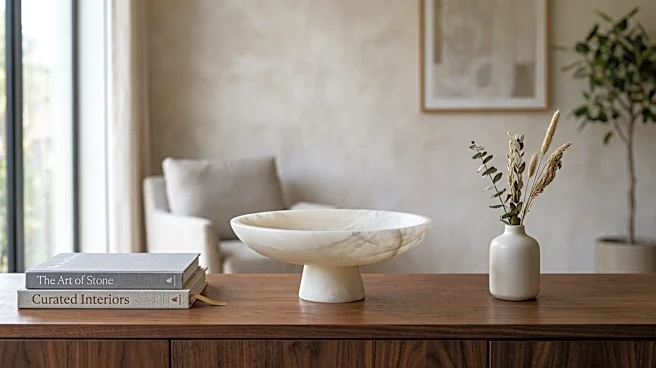
resurging in the late 18th and 19th centuries for pedestals, vases, lighting, and decor. Unlike porcelain, which is fired, alabaster is unfired, making it more delicate and suitable for indoor, decorative use. While some vintage porcelain brands are well-known, raw alabaster stoneware is gaining recognition among designers for its unique aesthetic, with items like shallow pedestal bowls resembling birdbaths fetching hundreds of dollars on secondhand websites.
Why It's Important?
The growing interest in vintage alabaster among designers has significant implications for the U.S. home decor market and secondhand economy. This trend elevates the perceived value of thrifted items, encouraging consumers to explore vintage and antique stores for unique finds rather than solely relying on new retail. For sellers of vintage goods, this increased demand can lead to higher prices and greater profitability for alabaster pieces. It also highlights a shift in consumer preferences towards unique, historically rich, and sustainable decor options, moving away from mass-produced items. This could also inspire manufacturers to produce new items that mimic the look and feel of vintage alabaster, influencing future design trends.
What's Next?
As designers continue to champion vintage alabaster, its presence in home decor is likely to expand. Consumers can expect to see more alabaster pieces featured in interior design publications and online platforms, further solidifying its status as a coveted material. This increased visibility may lead to a broader understanding and appreciation of alabaster's unique qualities, potentially driving up prices in the secondhand market. Thrift store enthusiasts and antique dealers may begin to specifically seek out alabaster items, recognizing their growing value and appeal to a design-conscious audience. The trend could also influence the production of new homeware, with more items incorporating alabaster or alabaster-like finishes.
Beyond the Headlines
The resurgence of alabaster in home decor speaks to a broader cultural appreciation for craftsmanship, history, and the unique imperfections that come with vintage items. In an era of rapid consumption, the desire for pieces with a story and a sense of permanence is growing. This trend also underscores the environmental benefits of sourcing secondhand, promoting a more sustainable approach to decorating. The delicate nature of alabaster, requiring indoor and decorative use, also subtly encourages a more mindful interaction with objects in the home, fostering an appreciation for their fragility and beauty. This shift reflects a move towards more curated and personal living spaces.