


What's Happening?
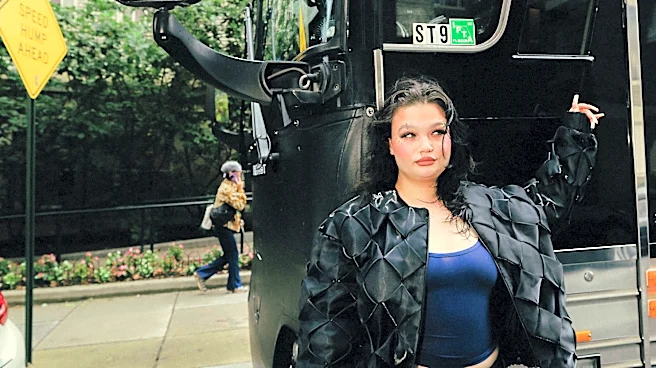
Whitney Anderson, a New York City-based interior stylist and decorator, has embarked on a significant renovation project in Michigan, converting a 128-year-old abandoned church into her personal residence, which she calls a 'chouse.' After a decade-long
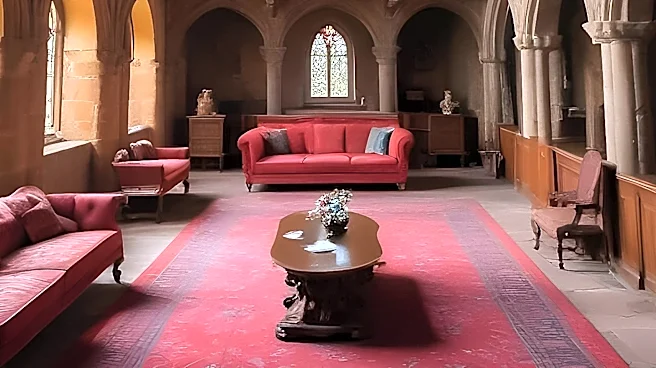
search for an affordable church to transform, Anderson purchased the property in June 2024 for $45,000. The property includes the 3,500-square-foot church, a parsonage house, and an adjacent 10,000-square-foot grass lot. The church, originally a Methodist church built in 1898, was in severe disrepair with roof damage, extensive water damage, and mold. Anderson has already invested approximately $194,000 in renovations, starting with critical repairs like roofing, gutters, waterproofing, and addressing mold. She has been documenting her journey, which gained viral attention on social media and led to her participation in the Magnolia Network's 'Home Reimagined' show, accelerating her renovation timeline.
Why It's Important?
This project highlights a growing trend of adaptive reuse, where historical or disused buildings are repurposed for new functions, contributing to urban revitalization and sustainable development. For Michigan, and potentially other states with aging infrastructure and declining rural populations, such initiatives can breathe new life into communities by preserving architectural heritage and creating new economic opportunities. Anderson's plan to convert the property into a bed and breakfast demonstrates a potential model for rural tourism and small business development. The project also showcases the power of social media in attracting attention and resources for large-scale personal endeavors, influencing public perception of renovation and design. The financial commitment and personal risk involved, described by Anderson as 'the biggest gamble' of her life, underscore the challenges and rewards of such ambitious undertakings, potentially inspiring others to consider similar projects.
What's Next?
Anderson aims to complete the bulk of the renovations by the end of 2028, with plans to turn the property into a bed and breakfast. Guests will stay in the parsonage house, while the 'chouse' will serve as a gathering space and Anderson's private quarters. Her immediate goals include restarting her interior styling business in Michigan to fund a roughly $40,000 excavation project on the parsonage house by next winter. She also intends to further monetize her social media presence and secure brand partnerships to support ongoing renovations. The project's visibility on the Magnolia Network and social media suggests continued public interest and potential for further sponsorships or collaborations. The success of her bed and breakfast venture could serve as a case study for similar adaptive reuse projects in the hospitality sector.
Beyond the Headlines
Beyond the immediate renovation, Anderson's project touches on deeper themes of personal fulfillment, community integration, and the redefinition of 'home.' Her decision to move from New York City to a small Michigan town and undertake such a massive project reflects a desire for a different lifestyle and a connection to historical architecture. The mixed reactions from the local community—some embracing the project, others questioning it—highlight the social dynamics involved when new residents or unconventional projects enter established communities. The repurposing of church elements, such as pews into furniture and a communion table into a kitchen island, speaks to a creative and respectful approach to preserving the building's history while adapting it for modern living. This endeavor also subtly challenges conventional notions of property value and investment, emphasizing passion and vision over purely financial returns.