



What's Happening?
Saudi Arabia's Public Investment Fund (PIF) is preparing to sell up to 25 percent of its ownership in Newcastle United, according to a report by Matt Hughes of The Guardian. JP Morgan has been appointed to manage the sale process. Currently, PIF holds
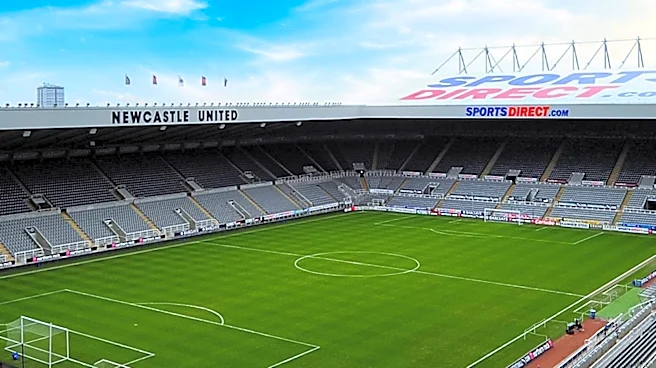
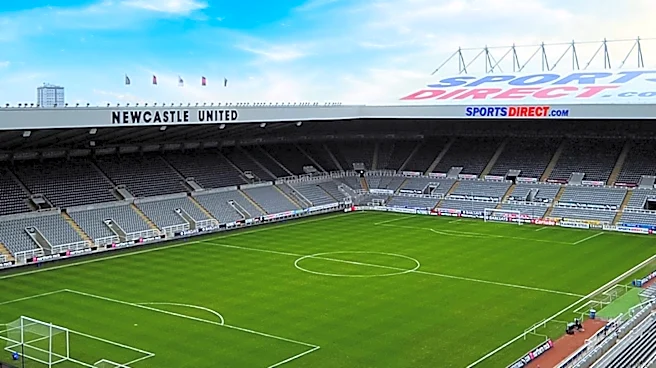
an 84 percent stake in the football club, with the Reuben brothers owning the remaining 16 percent. A 25 percent share issue would result in PIF retaining 63 percent of the club, while the Reuben brothers would maintain their 16 percent, and new investors would acquire 21 percent. This move is primarily aimed at securing external investment to finance significant infrastructure projects for the club, including the construction of a new stadium. Despite recent adjustments in PIF's broader sports investment portfolio, sources within PIF emphasize a long-term commitment to Newcastle United, indicating that this is a dilution of ownership rather than a complete exit strategy.
Why It's Important?
This partial sale by PIF is significant for Newcastle United as it seeks to fund crucial infrastructure developments, most notably a new stadium. By bringing in new investors, the club can access capital necessary for these projects without solely relying on PIF's direct funding. This strategy could accelerate the club's growth and modernization, enhancing its long-term competitiveness and revenue streams. For the U.S. sports investment landscape, this action highlights a trend where major international funds, while committed to their core assets, are increasingly open to strategic partnerships and partial divestments to optimize capital allocation and project financing. It also demonstrates the evolving financial models within global football, where external investment is sought to support ambitious expansion plans, potentially attracting more diverse investors to the sport.
What's Next?
The immediate next step involves JP Morgan facilitating the sale of up to 25 percent of Newcastle United shares to new investors. This process will determine the valuation of the club and the terms under which new stakeholders will join. Following the successful acquisition of new investment, Newcastle United is expected to proceed with its planned infrastructure projects, particularly the new stadium. The club's ability to attract significant external capital will be closely watched, as it could set a precedent for other football clubs seeking similar funding models. The ongoing scrutiny of PIF's wider sports portfolio will continue, but the fund's stated long-term commitment to Newcastle United suggests a focus on sustainable growth rather than a full divestment.
Beyond the Headlines
The decision by PIF to dilute its stake in Newcastle United, even while maintaining majority ownership, reflects a sophisticated approach to sports investment. It suggests a shift from sole proprietorship to a more diversified funding model, potentially mitigating financial risks and distributing the burden of large-scale capital expenditures. This move could also be interpreted as a strategic effort to enhance the club's financial independence and operational efficiency by bringing in additional expertise and resources from new investors. Furthermore, it underscores the increasing financial demands of modern football, where significant capital is required not only for player acquisitions but also for state-of-the-art facilities, which are crucial for long-term success and fan engagement. This trend could lead to more complex ownership structures in major sports franchises globally.