






What's Happening?
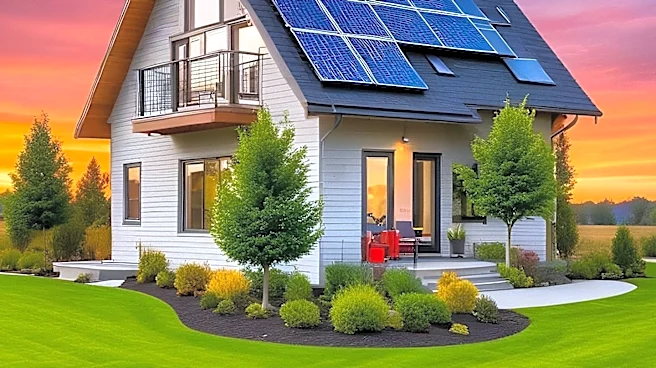
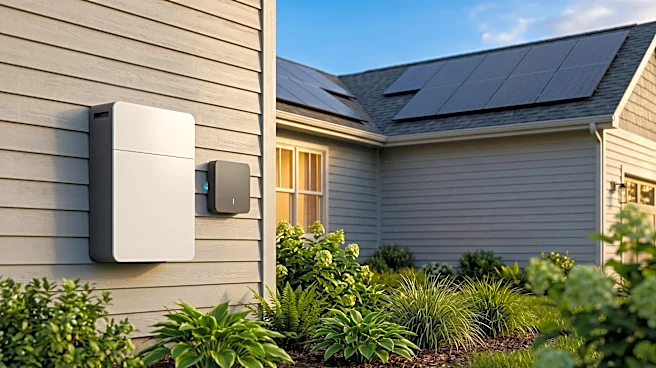
Sunrun, a leading residential solar, storage, and grid services company, has expanded its partnership with SPAN to power SPAN's XFRA distributed compute nodes using Sunrun's home solar and multi-battery storage systems. This arrangement links Sunrun's residential energy
platform directly to the growing demand for AI compute capacity. Under the partnership, Sunrun will utilize its installed base of approximately 200,000 batteries to support XFRA nodes through prepaid leases, which include whole-home backup and compensation for host customers. This initiative aims to integrate Sunrun's home battery fleet and grid services programs with distributed data center capacity, creating a unified operating model. The company has an internal target of 10 GWh of dispatchable energy by 2029, and the XFRA nodes provide an additional outlet for this stored power.
Why It's Important?
This partnership is significant as it reshapes the investment narrative for Sunrun and highlights a new frontier for residential energy solutions. By connecting home solar and battery storage to AI compute demand, Sunrun is tapping into a rapidly expanding sector, potentially diversifying its revenue streams beyond traditional solar installations. This move positions residential energy systems not just as power sources for homes, but as integral components of a distributed computing infrastructure. For the U.S. energy market, it signifies an innovative approach to grid services and energy monetization, where residential batteries can contribute to grid stability and support high-demand applications like AI. It also underscores the increasing value of distributed energy resources in a future characterized by growing computational needs and the imperative for resilient energy systems.
What's Next?
The success of this partnership will largely depend on Sunrun's execution volume, system uptime, and the economic terms of the contracts over the next few years. The main operational risk for Sunrun remains capital intensity and reliance on external funding, especially if residential demand softens due to changes in tax credits or if equipment deployment outpaces actual sign-ups. However, if the XFRA nodes roll out effectively, this could provide a consistent revenue stream and strengthen Sunrun's position as an energy services platform. Investors will be closely watching how consistently Sunrun can convert its battery capacity into recurring revenue without overstretching its balance sheet. The partnership could also influence other residential solar and storage providers to explore similar integrations with emerging technologies.
Beyond the Headlines
This collaboration between Sunrun and SPAN points to a deeper trend in the U.S. energy and technology sectors: the convergence of distributed energy resources with advanced computing. The concept of using residential batteries to power AI compute nodes blurs the lines between home energy management and data infrastructure, potentially leading to new models of energy consumption and generation. Ethically, this raises questions about data privacy and the environmental footprint of distributed AI computing, even as it leverages renewable energy. Culturally, it could normalize the idea of homes as active participants in the broader energy grid and digital economy, moving beyond passive consumption. This development could trigger long-term shifts in how energy is valued, managed, and integrated into daily life, fostering a more interconnected and intelligent energy ecosystem.