




What's Happening?
Rovensa Next has obtained R$45 million in financing from the Brazilian Funding Authority for Studies and Projects (FINEP) to bolster its research and development in agricultural biological inputs in Brazil. This 16-year financing deal, part of FINEP’s
subsidized “Mais Inovação” program, will cover 90% of the project costs, focusing on new biocontrol, bionutrition, and adjuvant products. Brazil is increasingly vital for the global biological inputs industry, with its market growing from R$675 million in 2019 to over R$6.2 billion in 2025. The number of companies in this sector has increased by more than 50% between 2022 and 2025. Rovensa Next views Brazil as both a significant market and a strategic innovation hub for developing and scaling biological technologies for worldwide application. The company recently opened a pilot fermentation plant at its Monte Mor site, complementing its Global Research and Innovation Center for Biosolutions in Hortolândia, to accelerate the transition of microbial products from lab research to industrial-scale manufacturing.
Why It's Important?
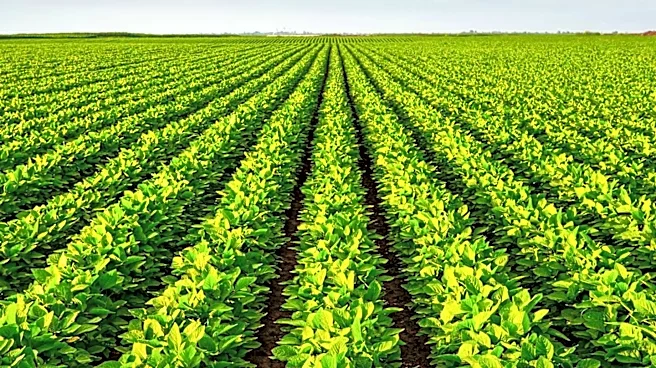
This investment underscores the growing global importance of biological inputs in agriculture, particularly in large-scale commodity production systems. The rapid expansion of Brazil's biological inputs sector, with a 15% year-on-year growth to R$6.2 billion in 2025 and a 28% increase in treated area to 194 million hectares, highlights a significant shift towards sustainable farming practices. The focus on soybeans (62% of bioinput use), corn (22%), and sugarcane (10%) demonstrates that biological solutions are moving beyond niche applications to become integral to major crop production. For the U.S. agricultural sector, this trend in Brazil could signal future directions in crop management, emphasizing reduced reliance on synthetic inputs and improved soil health. U.S. farmers and agricultural companies may look to these developments for insights into new technologies and market opportunities, potentially influencing research priorities and product adoption strategies in the U.S. The ability to test and scale technologies in a diverse agricultural environment like Brazil provides valuable data and proven solutions that could be adapted for U.S. conditions, fostering innovation and competitiveness in the biologicals market.
What's Next?
Rovensa Next will proceed with its Brazilian innovation program, utilizing the FINEP funding to advance R&D in biocontrol, bionutrition, and adjuvant products. The company aims to enhance its capacity to create effective solutions tailored to local agricultural challenges in Brazil, with the intention of scaling these technologies for global distribution. This includes further integration of its pilot fermentation plant and research center to streamline the development and production of microbial products. The continued growth and maturation of Brazil's biological inputs market will likely serve as a benchmark for other agricultural regions, including the U.S., as biologicals transition from promising alternatives to established components of commercial crop management. Future developments will involve monitoring the performance of these new biological solutions in diverse agricultural settings and assessing their impact on crop productivity, soil health, and the reduction of synthetic input use. The success of these initiatives could influence regulatory frameworks and investment decisions in the biologicals sector worldwide.
Beyond the Headlines
The significant investment in biological inputs reflects a broader global agricultural trend towards sustainability and environmental stewardship. As concerns about the long-term effects of synthetic pesticides and fertilizers grow, biological solutions offer a pathway to more eco-friendly farming practices. This shift has ethical implications, promoting healthier ecosystems and potentially safer food production. Legally, the increasing adoption of biologicals may lead to new regulatory frameworks and standards for product development, testing, and labeling, ensuring efficacy and safety. Culturally, it signifies a growing acceptance among farmers of innovative, biologically-based approaches, moving away from traditional chemical-intensive methods. This transition could also foster greater collaboration between research institutions, private companies, and government bodies to accelerate the development and deployment of these technologies. The long-term impact could include a fundamental reshaping of agricultural supply chains, with a greater emphasis on biological research and development, and a potential reduction in the environmental footprint of global food production.