







What's Happening?
Businesses in Seattle's Capitol Hill neighborhood are facing significant disruptions and potential revenue losses due to a $6.4 million sewer rehabilitation project at the intersection of 12th Avenue and Pike Street. The project, which began on August
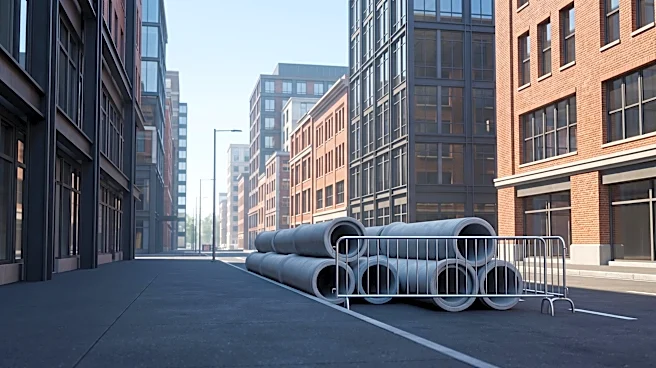
17 and is expected to last six weeks, was initiated with little to no prior notification for many local business owners. Erin Reinhart, founder of "Circle the Blocks," a community group, stated that approximately 50 businesses were contacted just days before the project started, with many unaware of its scope or impact. Business owners like Sabrina Tinsley of Osteria La Spiga and Howard Russell of La Cha-Bliss Wines reported receiving minimal or no notice, leading to immediate decreases in customer traffic, cancellations, and blocked access to their establishments. Kaleigh Wilson, owner of "The Unicorn" bar, noted that sidewalks and streets were completely blocked, and their trash and recycling area was inaccessible for nearly three weeks.
Why It's Important?
This situation highlights a critical issue for small businesses, particularly those reliant on seasonal revenue. The lack of adequate communication from Seattle Public Utilities (SPU) and the Seattle Department of Transportation (SDOT) about the project's commencement and its immediate effects has put these businesses in a precarious financial position. Many depend on summer earnings to sustain them through slower periods, and unexpected disruptions like construction, noise, and blocked access can severely impact their ability to meet financial obligations. The experience of these businesses underscores the broader challenges faced by local economies when public works projects are not managed with sufficient community engagement and foresight. The potential for business closures, as feared by some owners, could lead to a decline in local employment and a reduction in the vibrancy of the Capitol Hill commercial district.
What's Next?
Business owners are hopeful that the second phase of the sewer project will adhere to the reported six-week timeline. They are also working with the Greater Seattle Business Association to ensure that the city posts "Businesses Are Open" signs to mitigate the negative impact on customer perception and access. However, the long-term implications for some businesses remain uncertain, with fears that some may not survive the financial strain. KOMO News has reached out to SPU and SDOT for comment, and their response is pending. The incident may prompt a review of notification protocols for public works projects in Seattle to prevent similar disruptions and better support local businesses in the future.
Beyond the Headlines
The lack of communication surrounding this public works project raises questions about civic responsibility and the support systems in place for small businesses. While infrastructure improvements are essential, the manner in which they are executed can have profound ethical and economic consequences for local communities. The incident also highlights a potential disconnect between city agencies and the businesses they impact, suggesting a need for more robust and proactive engagement strategies. The reliance of these businesses on summer revenue underscores the fragility of many small enterprises and their vulnerability to unforeseen external factors, emphasizing the importance of clear communication and collaborative planning between government entities and the private sector.