






What's Happening?
James Cameron, a renowned director, continues to redefine cinematic experiences through his innovative use of technology and immersive storytelling. His career, which began in the art department for Roger Corman's films, has evolved to consistently push
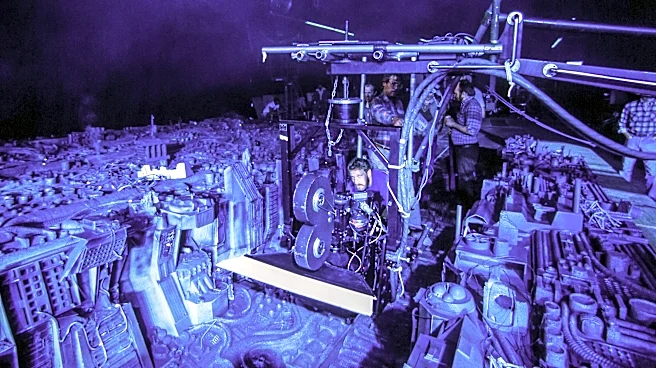
the boundaries of what cinema can achieve. Cameron's films are characterized by a lifelong fascination with creating convincing environments, often making viewers feel as though they are waking from a dream when leaving his cinematic worlds. From his early work like 'The Terminator,' which introduced 'technoir,' to epics like 'Titanic,' which became the highest-grossing film of its time, Cameron has demonstrated an obsession with mood, machinery, and momentum. His later projects, such as 'Ghosts of the Abyss,' transitioned into documentary filmmaking while maintaining a high level of immersion through cutting-edge 3D technology and robotic cameras. The 'Avatar' series further exemplifies his commitment to redefining cinema as an environment rather than just a screen, utilizing 3D, motion capture, depth of field, and high frame rates to create a deeply sensory experience. His recent work, including a 3D concert film for Billie Eilish, applies the same immersive philosophy to live performance, placing viewers in multiple vantage points and blurring the lines between audience and artist.
Why It's Important?
Cameron's continuous innovation is significant because it sets new benchmarks for the film industry, influencing how stories are told and how audiences engage with visual media. His pioneering use of advanced technologies like 3D, motion capture, and high frame rates pushes other filmmakers and studios to explore similar avenues, fostering technological advancement within the entertainment sector. By creating deeply immersive experiences, Cameron challenges traditional viewing paradigms, potentially leading to new forms of cinematic art and audience participation. This impact extends beyond just blockbusters; his methods demonstrate how technology can be integrated seamlessly into storytelling to enhance emotional connection and sensory perception. The success of his films, both critically and commercially, proves that audiences are receptive to these evolving cinematic experiences, encouraging further investment in research and development for film production. His work also highlights the potential for cinema to transcend mere visual spectacle, aiming for a more visceral and all-encompassing experience that can leave a lasting impression on viewers.
What's Next?
Looking ahead, James Cameron is expected to continue his trajectory of cinematic innovation, particularly with the ongoing 'Avatar' series. The future installments, such as 'Fire and Ash,' are anticipated to further synthesize the elemental themes and technological advancements seen in previous films, aiming to create even more expansive and suffocating environments. These projects will likely continue to leverage cutting-edge visual effects, 3D technology, and high frame rates to deepen viewer immersion. Beyond the 'Avatar' franchise, Cameron's involvement in projects like the Billie Eilish 3D concert film suggests a broader application of his immersive techniques across different genres and formats, potentially influencing live event broadcasts and virtual reality experiences. His continued exploration of how technology can eliminate the barrier between viewer and image indicates that future projects will likely focus on creating experiences that are not just watched but physically felt, pushing the boundaries of sensory engagement in entertainment. This could lead to new collaborations and the development of proprietary technologies that further enhance the immersive quality of his productions.
Beyond the Headlines
Beyond the immediate technological marvels, James Cameron's work raises deeper implications about the future of human perception and storytelling. His relentless pursuit of immersion challenges the traditional passive role of the audience, moving towards an active, almost participatory experience. This shift could have long-term effects on how narratives are constructed, emphasizing sensory detail and environmental storytelling over conventional plot structures. Ethically, the creation of such hyper-realistic and immersive worlds prompts questions about the nature of reality and escapism, particularly as the line between the cinematic experience and lived experience blurs. Culturally, Cameron's films often explore themes of environmentalism, technology's impact on society, and the human connection to nature, embedding profound messages within his spectacle. His ability to make audiences feel physically present in fictional worlds could also influence other fields, such as education, therapy, and virtual tourism, by demonstrating the power of immersive environments to convey information and evoke empathy. This ongoing evolution of cinematic language, driven by Cameron, suggests a future where film is not just an art form but a powerful tool for shaping perception and understanding.