




What's Happening?
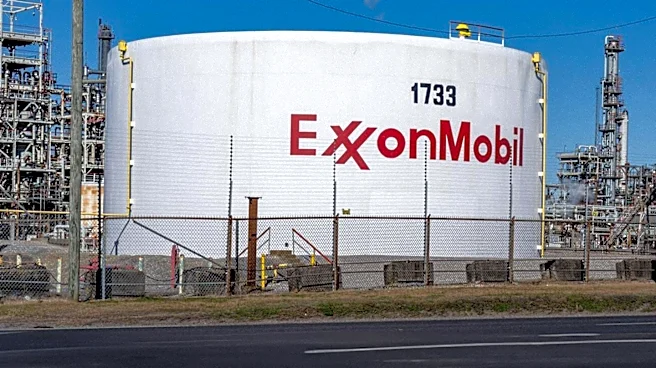
Darren Woods, CEO of ExxonMobil, has publicly stated that Venezuela is 'uninvestable,' a stance he reiterated during a meeting with President Trump. This declaration comes despite efforts by the Trump administration to encourage U.S. oil companies to return
to Venezuela and increase their investments. Woods' assessment is rooted in Venezuela's history of expropriating ExxonMobil's assets on two separate occasions, leading to significant caution from the company. While other energy companies like Chevron, Repsol, and ENI have made concrete commitments to explore and expand production in Venezuela, ExxonMobil remains in a technical evaluation phase. The company has sent teams to assess viability but has not confirmed any comparable investments, and its leadership has refrained from officially commenting on President Trump's statements regarding their imminent return. This cautious approach highlights the perceived risks and lack of legal and commercial protections in the Venezuelan market, according to Woods.
Why It's Important?
ExxonMobil's reluctance to invest in Venezuela, despite pressure from the Trump administration, underscores the significant geopolitical and economic risks perceived by major U.S. corporations. This decision by one of the world's largest oil companies signals a lack of confidence in Venezuela's political stability and legal framework, which could deter other potential foreign investors. For the U.S. oil industry, ExxonMobil's stance suggests that even with governmental encouragement, companies prioritize long-term stability and asset protection over short-term political incentives. This could impact the Trump administration's broader strategy to influence Venezuela's oil sector and potentially reduce the influence of other foreign powers like Russia and China. The lack of investment from a key player like ExxonMobil could also hinder Venezuela's ability to recover its oil production and stabilize its economy, which is crucial for its citizens who are facing severe economic hardship.
What's Next?
The immediate future will likely see continued technical evaluations by ExxonMobil in Venezuela, but without confirmed investment commitments, the company's presence will remain limited. The Trump administration may continue its efforts to incentivize U.S. oil companies, but ExxonMobil's position suggests that fundamental changes in Venezuela's legal and political landscape would be necessary to attract significant investment. The disparity in commitment among oil companies—with some like Chevron moving forward while ExxonMobil holds back—could lead to a fragmented approach to Venezuela's oil sector. This situation may also prompt further discussions within the U.S. government regarding the effectiveness of its current strategy in Venezuela and whether additional measures are needed to de-risk the investment environment. The ongoing political and economic instability in Venezuela, coupled with the upcoming legislative elections in the U.S., could further complicate any future investment decisions.
Beyond the Headlines
ExxonMobil's 'uninvestable' declaration for Venezuela highlights a deeper issue concerning the balance between geopolitical objectives and corporate risk assessment. While the Trump administration sought to leverage U.S. oil companies to exert influence and potentially stabilize Venezuela, ExxonMobil's decision prioritizes shareholder interests and long-term asset security over political directives. This situation brings to light the ethical considerations for corporations operating in politically unstable regions, particularly those with a history of expropriation. It also raises questions about the efficacy of using economic incentives alone to drive investment in environments lacking robust legal protections and political predictability. The long-term implications could include a re-evaluation of how U.S. foreign policy engages with countries facing similar challenges, potentially shifting towards more comprehensive strategies that address underlying governance and rule of law issues before expecting significant private sector investment.