






What's Happening?
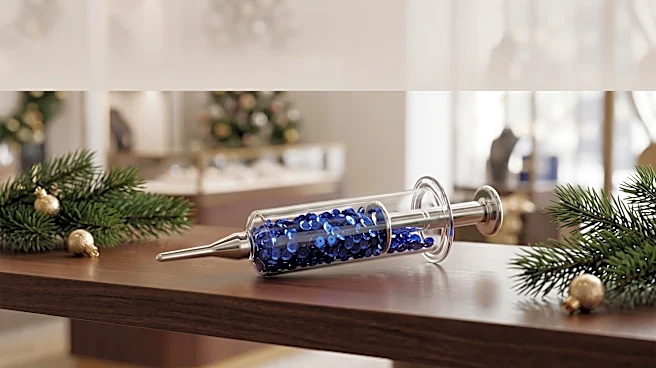
Selfridges, a prominent department store, is currently facing public division and criticism for selling a 'Fat Burner Injection' Christmas decoration. The ornament, created by the brand Vondels and priced at £18, is designed to resemble a needle filled
with blue sequins and features the words 'fat burner' on its side. This item is part of Vondels' 'The Influencer Edition,' which also includes 'wrinkle remover' and 'credit card' ornaments. Shoppers have expressed varied reactions, with some labeling the decoration as 'harmful' and 'classless' due to its perceived glamorization of diet culture. Others view it as a 'harmless novelty' or 'quite funny.' This is not the first instance of Selfridges selling controversial Christmas decorations; last year, the store offered an 'Ozempic' syringe-shaped ornament, which also sparked debate.
Why It's Important?
The controversy surrounding Selfridges' 'Fat Burner Injection' decoration highlights a broader societal discussion about the commercialization of sensitive health and body image topics. For U.S. consumers and retailers, this event serves as a cautionary tale regarding product choices and their potential impact on public perception and brand reputation. The backlash underscores growing consumer awareness and sensitivity towards diet culture and its potential negative effects, particularly on mental and physical health. Retailers, especially those with a significant online presence or international reach, must navigate these cultural nuances carefully to avoid alienating customer segments and facing public relations crises. The incident also reflects the increasing influence of social media in shaping public opinion and driving consumer responses to controversial products.
What's Next?
Selfridges and Vondels have been contacted for comment regarding the 'Fat Burner Injection' decoration, and their responses are anticipated. The ongoing public debate may prompt a reevaluation of product selection policies within Selfridges and other retailers, particularly concerning novelty items that touch upon health, body image, or societal trends. Depending on the intensity and duration of the backlash, there could be calls for the removal of the product from sale or for the companies to issue statements addressing the concerns raised by shoppers. This situation could also lead to increased scrutiny from consumer advocacy groups and potentially influence future holiday season product offerings across the retail sector, encouraging a more mindful approach to merchandise that could be perceived as promoting harmful ideals.
Beyond the Headlines
This incident delves into the ethical responsibilities of retailers in an era where consumer products increasingly reflect and influence cultural norms. The 'Fat Burner Injection' decoration, alongside last year's 'Ozempic' ornament, points to a trend of commercializing medical or body-altering practices, which can normalize or even glamorize potentially unhealthy behaviors. This raises questions about the role of retail in promoting societal well-being versus merely capitalizing on trends. The division among shoppers also reveals a complex interplay between humor, novelty, and the serious implications of diet culture. It highlights how seemingly innocuous items can trigger significant discussions about body positivity, mental health, and the pervasive nature of beauty standards, pushing retailers to consider the deeper cultural messages embedded in their product lines.