
What's Happening?
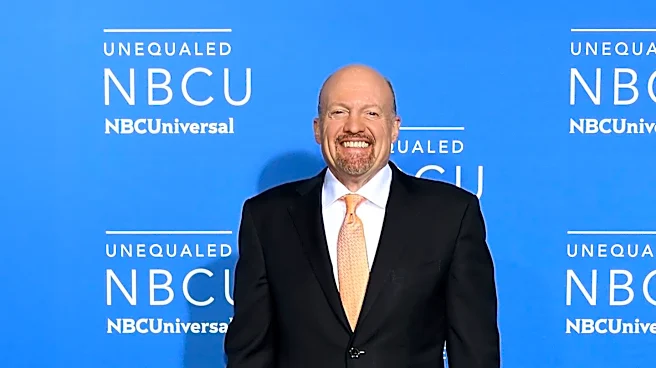
Financial commentator Jim Cramer has publicly supported GameStop's turnaround efforts, stating on CNBC on November 24 that the company's strategy "actually works." This endorsement follows a 'Buy' rating
and a $33 price target from Needham analyst Stefanos Crist. Crist initiated coverage, suggesting that the market has misjudged GameStop due to its 'meme-stock' history, overlooking significant business changes. Cramer's positive outlook is based on three key factors: store closures, growth in collectibles sales, and GameStop's stake in eBay. The company has significantly reduced its store count from approximately 5,500 in 2019 to about 1,900 today. This reduction has contributed to a widening gross margin, which increased from 29.1% to 43.7% in the most recent quarter. Collectibles revenue surged by 57% year-over-year, now accounting for 45.1% of net sales, up from 19% two years prior. Despite a 19% decline in total revenue due to falling video game sales, operating income rose to $160.2 million from $66.4 million, and the company raised its fiscal 2026 adjusted EBITDA outlook to over $650 million.
Why It's Important?
This development is significant for U.S. financial markets and retail investors, particularly those who have followed GameStop's volatile journey as a 'meme stock.' Jim Cramer's endorsement, coupled with an analyst upgrade, could influence investor sentiment and potentially stabilize or increase GameStop's stock value. The shift in GameStop's business model, emphasizing collectibles and strategic store closures, reflects a broader trend in retail where companies adapt to changing consumer preferences and digital commerce. The growth in collectibles highlights a resilient niche market that can generate substantial revenue, offering a lifeline to traditional brick-and-mortar retailers. For the broader retail sector, GameStop's strategy could serve as a case study for reinvention, demonstrating how to leverage existing assets and pivot towards new revenue streams. However, the reliance on its eBay stake introduces a degree of risk, as its value is subject to fluctuations in eBay's stock performance. The company's ability to maintain profitability despite declining video game sales will be a key indicator of its long-term viability.
What's Next?
GameStop's management has raised its fiscal 2026 adjusted EBITDA outlook to more than $650 million, indicating confidence in its current trajectory. Investors will closely monitor future earnings reports to see if the company can sustain the growth in collectibles and further improve its margins. The impact of its eBay stake on overall financial performance will also be a critical point of observation. The market's perception of GameStop, still influenced by its 'meme-stock' past, may gradually shift if the company continues to demonstrate consistent profitability and strategic execution. Further store optimization efforts and potential new initiatives to diversify revenue streams beyond collectibles could also be on the horizon. The success of GameStop's turnaround could encourage other struggling retailers to explore similar strategies of niche market focus and operational efficiency.
Beyond the Headlines
The GameStop narrative extends beyond typical financial analysis, touching upon the evolving dynamics between traditional market institutions and retail investors. The 'meme-stock' phenomenon, which propelled GameStop into the spotlight, underscored the power of coordinated retail investor action. This current turnaround attempt, if successful, could redefine how Wall Street views companies with strong retail investor backing. It also highlights the challenges and opportunities for legacy businesses in adapting to a rapidly changing consumer landscape. The emphasis on collectibles taps into a cultural trend of nostalgia and niche interests, demonstrating that physical retail can thrive by catering to specific communities. The story also raises questions about the long-term sustainability of such pivots and the potential for other 'meme stocks' to undergo similar transformations, influencing broader market behavior and regulatory discussions around market manipulation and investor protection.