

What's Happening?
Egypt's North Coast, known locally as 'El Sahel,' is undergoing a significant transformation from a seasonal beach destination into a year-round economic platform. This shift is driven by extensive government infrastructure projects, including multi-lane
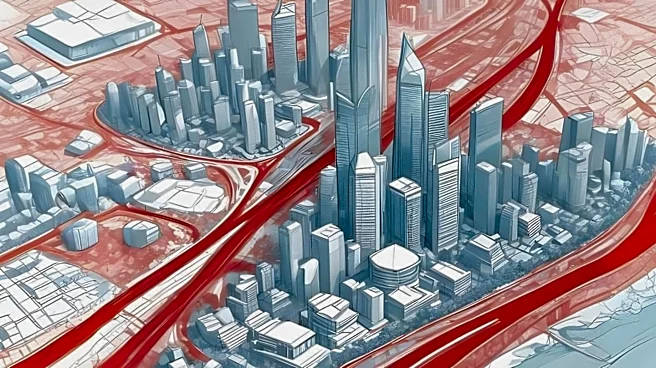
road networks and the expansion of Alamein International Airport and Borg El Arab Airport. Mega-projects like New Alamein City and high-end destinations such as Marassi and Hacienda Bay are also contributing to this development. The area has attracted substantial international and regional investment, with GCC governments committing $59.5 billion to Egypt since 2021, and the country's construction pipeline reaching $120 billion in awarded projects. This influx of capital is moving the market beyond traditional residential and opportunistic investments towards strategic, long-term developments that integrate residential properties with hotels, retail, leisure, and infrastructure. The UAE's ADQ, for instance, acquired development rights for Ras El Hekma in 2024, planning a world-class city to attract international tourism.
Why It's Important?
This transformation is crucial for Egypt's economic diversification, aiming to establish the North Coast as a new corridor for investment, talent attraction, and economic activity, complementing the country's traditional growth centers. The development is shifting the economic model from seasonal visitor activity to year-round economic activity, driven by residents, businesses, and investors. While tourism remains a critical component, the long-term goal is to create an environment that supports higher-value jobs in hospitality, entertainment, retail, healthcare, education, and knowledge-intensive sectors, rather than just construction. The relative affordability of branded residences in Egypt, despite trading at a premium, makes the North Coast an attractive investment compared to other regional coastal markets. This strategic development is positioning Egypt as the third-largest construction market in the region, after Saudi Arabia and the UAE, and is expected to significantly boost its overall economic landscape.
What's Next?
The North Coast is projected to become a major Mediterranean hub by the end of the decade, with government ambitions identifying 2028 as a key milestone for Ras El Hekma's emergence as a global tourism hub. Continued investment, timely project delivery, and effective destination management will be critical for this vision to materialize. The focus will be on creating a diverse calendar of experiences beyond traditional sun-and-sea tourism, alongside developing essential year-round living infrastructure such as schools, universities, healthcare facilities, and digital connectivity. This comprehensive approach aims to transform the North Coast into a functioning community where people choose to build their lives, rather than just vacation. The success will be measured by the economic activity generated and the creation of a resilient, year-round destination.
Beyond the Headlines
The development of Egypt's North Coast highlights a broader trend of nations leveraging their geographical assets for economic growth and diversification. The distinction between 'Good Sahel' and 'Evil Sahel' among locals reflects the social and economic implications of rapid, high-end development, potentially creating disparities and altering the region's cultural fabric. The emphasis on creating an environment for higher-value jobs and attracting talent underscores a strategic shift towards a knowledge-based economy, moving beyond reliance on seasonal tourism. This project also serves as a case study for how large-scale infrastructure and real estate developments can reshape regional economies, attract foreign direct investment, and potentially address unemployment, while also posing challenges related to social equity and environmental sustainability. The long-term success will depend on balancing economic ambitions with inclusive development and preserving local identity.