








What's Happening?
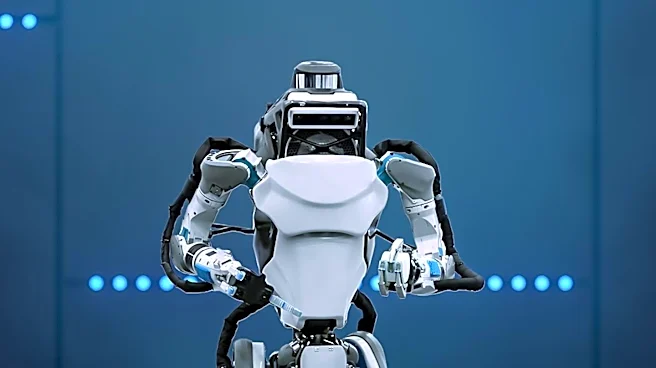
Agility Robotics, a company specializing in humanoid robots, has announced plans to go public through a merger with Churchill Capital Corp XI, a special-purpose acquisition company (SPAC). This deal values Agility Robotics at approximately $2.5 billion.
The company, which originated from Oregon State University in 2015, is known for its humanoid robot, Digit, which is designed to perform repetitive physical tasks. The merger is expected to generate over $600 million in gross proceeds, with significant investments from Foxconn and other backers like Nvidia, Amazon, and SoftBank. Agility Robotics aims to use the funds to expand its operations, fulfill existing orders, and scale the production of its next-generation robot, Digit v5.
Why It's Important?
The decision to go public via a SPAC merger is significant as it positions Agility Robotics as a pioneer in the humanoid robotics industry in the U.S. This move could set a precedent for other robotics companies considering public offerings. The influx of capital will enable Agility to enhance its production capabilities and meet the growing demand for automation in industries such as logistics and manufacturing. The company's focus on safety and integration with Nvidia's new safety system could also influence industry standards, potentially leading to broader acceptance and deployment of humanoid robots in various sectors.
What's Next?
Following the merger, Agility Robotics plans to focus on scaling its operations and increasing the deployment of its robots across different facilities. The company is also working on improving the safety features of its robots to allow them to operate in human environments without physical barriers. As the market for humanoid robots grows, Agility's public debut could attract more investors and partnerships, further accelerating its growth and innovation in the field.
Beyond the Headlines
The SPAC merger highlights a shift in the robotics industry from experimental prototypes to practical applications. Agility Robotics' success could encourage more companies to explore similar paths, potentially leading to increased competition and innovation. The collaboration with Nvidia on safety systems also underscores the importance of technology partnerships in advancing robotics capabilities. As humanoid robots become more integrated into everyday operations, ethical considerations regarding their impact on employment and workplace dynamics may also come to the forefront.