
What's Happening?
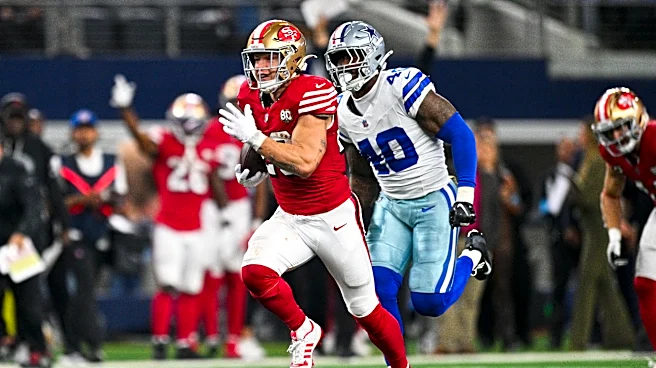
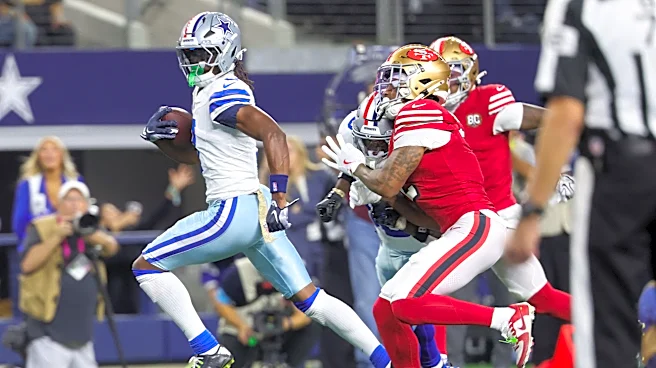
Erin Andrews, a FOX Sports reporter, recounted the severe travel challenges faced by her team, including colleague Charissa Thompson, to cover the Dallas Cowboys-San Francisco 49ers game. The disruptions stemmed from a three-day FAA ground stop that caused
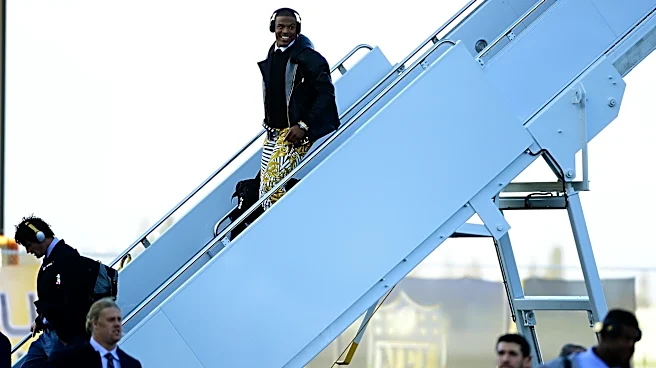
widespread radar and radio failures, leading to thousands of flight delays and cancellations across the United States. Andrews described the journey to Dallas as 'hell,' involving planes, trains, and automobiles. The team's dedication was highlighted by camera crew members driving up to 17 hours to ensure coverage, and in one unprecedented instance, four NFL referees officiated two separate games on the same day due to travel issues. Despite the chaos, the FOX crew successfully reached their destination and covered the game.
Why It's Important?
This event underscores the critical logistical challenges faced by media organizations and sports leagues when widespread infrastructure failures occur. The FAA ground stop, impacting air traffic control, demonstrated how quickly national events can be affected by systemic issues, even those seemingly unrelated to the event itself. For sports broadcasting, the ability to deliver live coverage is paramount, and the extraordinary measures taken by the FOX team highlight the industry's commitment to maintaining broadcast schedules. It also brings to light the often-unseen efforts of support staff, like camera crews, whose dedication is essential for live sports production. The incident could prompt a review of contingency plans for major events in the face of national travel disruptions, potentially leading to more robust backup strategies for essential personnel.
What's Next?
While the immediate crisis of the FAA ground stop has passed, the incident may lead to discussions within broadcasting networks and sports leagues about enhancing contingency plans for future travel disruptions. This could involve exploring alternative transportation methods, pre-positioning equipment and personnel, or developing more flexible scheduling for critical staff. The NFL Referees Association's acknowledgment of the 'unique and unprecedented situation' suggests that similar events could prompt a re-evaluation of how officials are assigned and transported, especially for high-profile games. Broadcasters like FOX Sports may also assess their internal protocols to minimize the impact of such widespread travel chaos on their ability to deliver uninterrupted coverage.
Beyond the Headlines
The incident reveals the intricate web of dependencies that underpin large-scale national events, particularly in the realm of live sports broadcasting. Beyond the immediate travel woes, it highlights the human element of dedication and resilience within the media industry. The willingness of individuals to undertake arduous journeys to fulfill their professional obligations speaks to a deeper commitment to their craft and the audience. It also subtly points to the economic implications of such disruptions, as delays and cancellations can lead to significant financial losses for airlines, businesses, and individuals. The story serves as a reminder of the fragility of modern infrastructure and the ripple effects that failures in one sector can have across diverse industries.