




What's Happening?
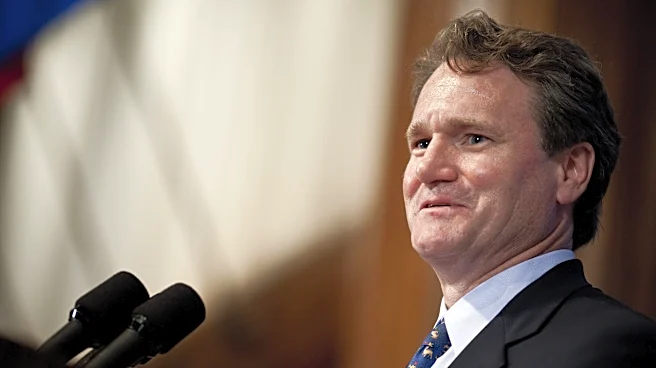
Bank of America CEO Brian Moynihan stated that recent banking glitches and tech disruptions across the United States are a result of real-time cybersecurity upgrades, not malicious hacking. Moynihan explained that artificial intelligence (AI) has significantly
accelerated the pace of cyber threats, compelling major financial institutions to continuously update their systems. To counter these automated threats, Bank of America and its third-party software vendors use AI models to identify vulnerabilities and deploy immediate software fixes. This process, known as 'patching,' can temporarily disrupt service and cause confusion for consumers, who might see a '$0' balance during a glitch. Moynihan assured that customer funds are protected by federal deposit insurance and regulations, clarifying that display glitches are due to systems temporarily failing to pull account data, not missing money. He also noted that Bank of America has increased its cybersecurity resources by 30%, dedicating approximately one-third of its $250 million AI budget this year to cyber defense.
Why It's Important?
The explanation from Bank of America's CEO sheds light on the evolving landscape of cybersecurity in the financial sector and its direct impact on consumers. The increasing reliance on AI for both cyber threats and defenses means that temporary service disruptions may become a more frequent occurrence. This situation highlights the critical balance between maintaining robust security against sophisticated AI-driven attacks and ensuring uninterrupted service for customers. For U.S. industries, particularly financial institutions, it underscores the necessity of significant investment in AI-powered cybersecurity. Consumers, on the other hand, face the challenge of understanding these complex technical issues and trusting that their funds are secure despite temporary outages. The collaboration between banks and federal agencies, including the White House, is crucial, especially when dealing with state-sponsored cyber actors, as individual banks cannot combat these threats alone.
What's Next?
As AI technology continues to advance, the financial industry will likely see further integration of AI into both offensive and defensive cybersecurity strategies. This suggests that banks will continue to invest heavily in AI-driven patching and security measures, potentially leading to ongoing, albeit temporary, service disruptions. Consumers will need to adapt to these changes, following bank advisories and utilizing features like automated account notifications and transaction blocks. The ongoing collaboration between financial institutions and federal agencies will be vital for addressing state-sponsored cyber threats, potentially leading to new policies or joint initiatives to enhance national cybersecurity infrastructure. Moynihan anticipates that the process will 'smooth out over time' as banks become more adept at using AI tools for defense, suggesting a future where these upgrades cause less disruption.
Beyond the Headlines
The narrative presented by Bank of America's CEO points to a deeper societal shift where the very tools designed to enhance efficiency and security—like AI—also introduce new complexities and vulnerabilities. The 'patching' process, while essential for defense, creates a paradox where security measures themselves can cause temporary instability, eroding consumer confidence. This raises ethical questions about transparency and communication during tech outages, as consumers often interpret 'glitches' as direct threats to their financial well-being. Furthermore, the significant investment in AI for cyber defense by major banks, coupled with their reliance on government intervention for state-sponsored attacks, highlights the increasing militarization of cyberspace. This trend could lead to a future where financial stability is inextricably linked to a nation's cyber defense capabilities and international cooperation in combating digital warfare.